
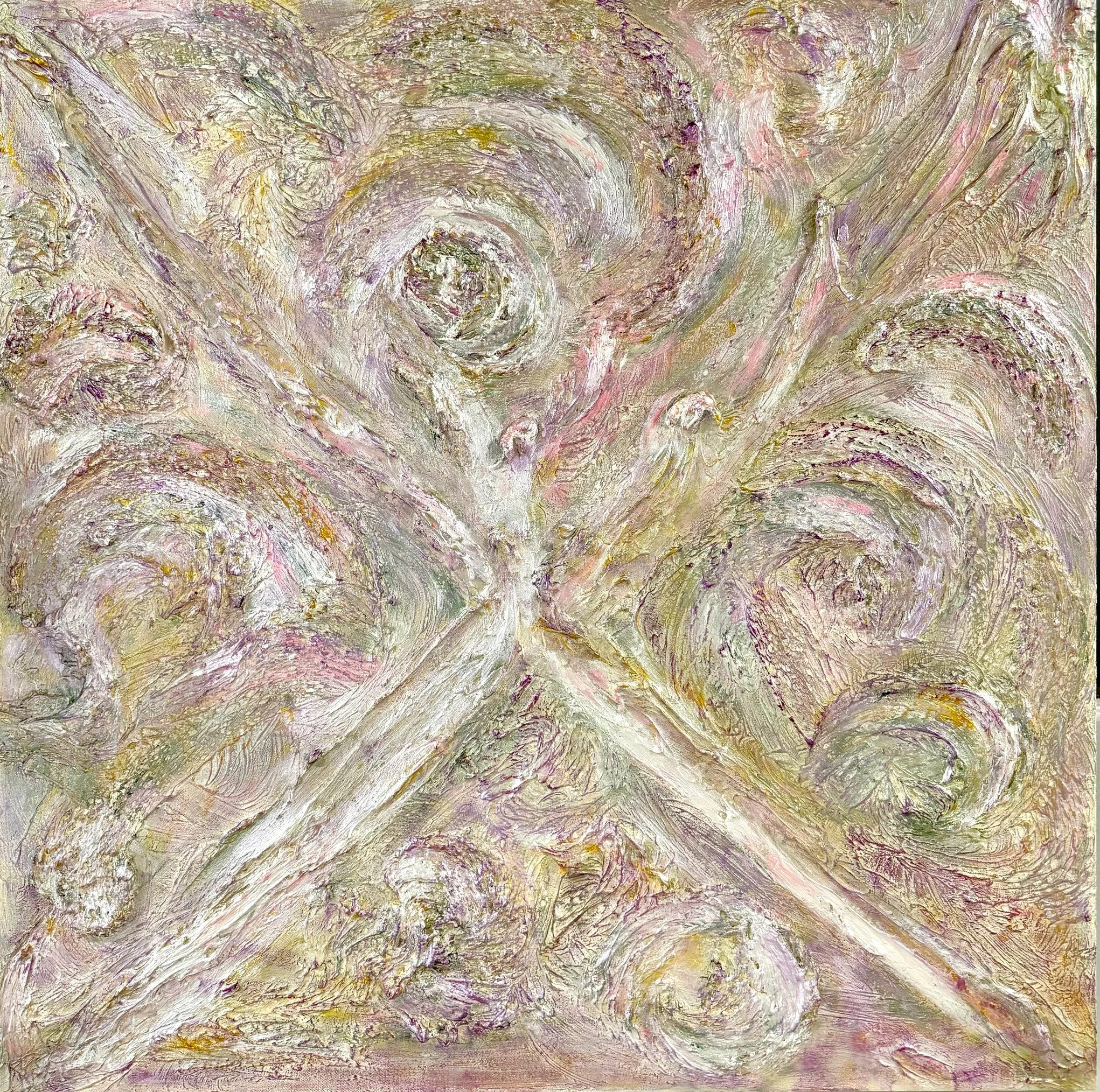
Architecture Of Emotion Exhibition
Architecture Of Emotion, Solo EXHIBITION
Angelina Mirabito
May 6th - 28th 2026
My practice examines how painting functions as a structure through which emotional experience takes form. The works develop through layered textures and varied materials, built over extended periods through processes of pressure, accumulation, interruption, and reworking. Each surface holds the record of its formation, carrying traces of intensity, resistance, and adjustment within its structure.
Emotion forms through interaction between body, environment, and perception. It moves, gathers, expands, and stabilises. Painting provides a site where these conditions can be shaped and held. Through material, scale, and spatial relation, the work allows emotional experience to become perceptible and embodied.
Architecture is understood as the organisation of experience through material presence. It shapes how the body moves, how perception settles, and how emotional states are held within space. My work extends this understanding into painting, positioning each surface as an active element within a larger emotional and spatial field.
Texture, density, and light determine how the work is encountered. The viewer engages through movement and duration, allowing emotional responses to organise in relation to the surface. Each painting operates as a site where internal states and external conditions meet, forming a structure through which experience can be held and understood.
Architecture of Emotion establishes the conditions through which emotion takes form, gathers, and becomes coherent.
Curation: Angelina Mirabito with Louisa Chu
Spatial Interventions: Angelina Mirabito
Installation: Scott Ross
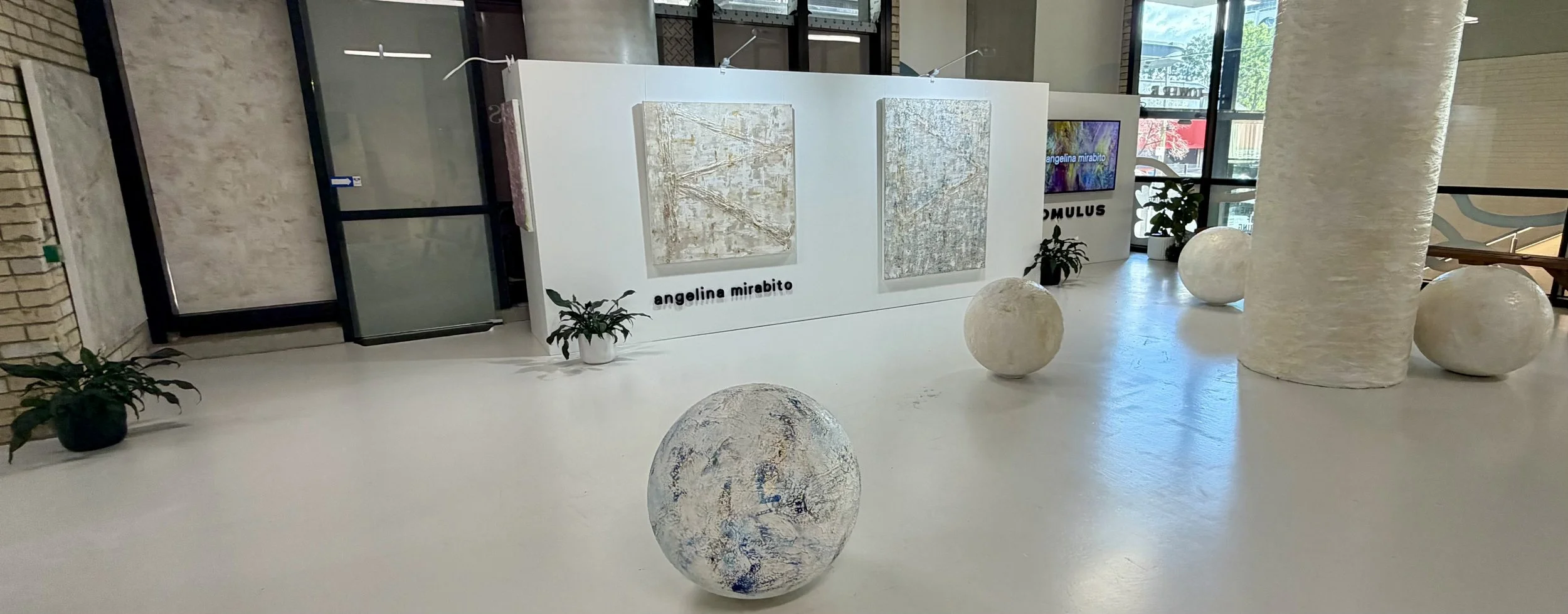
Exhibition Gallery
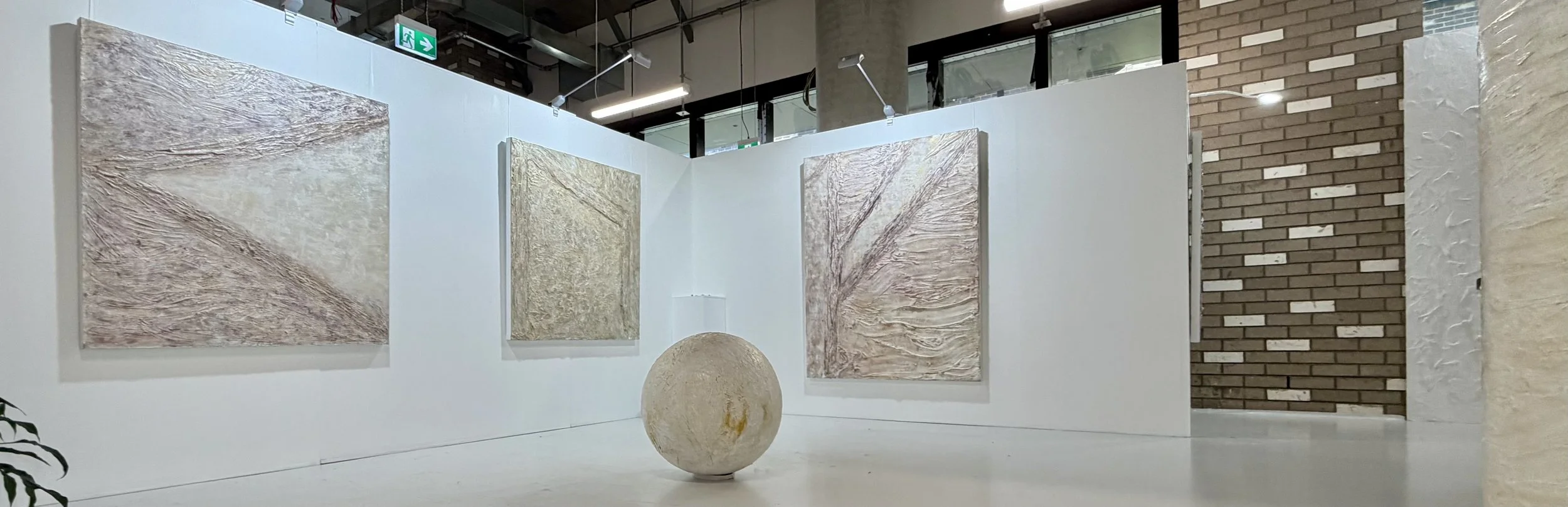
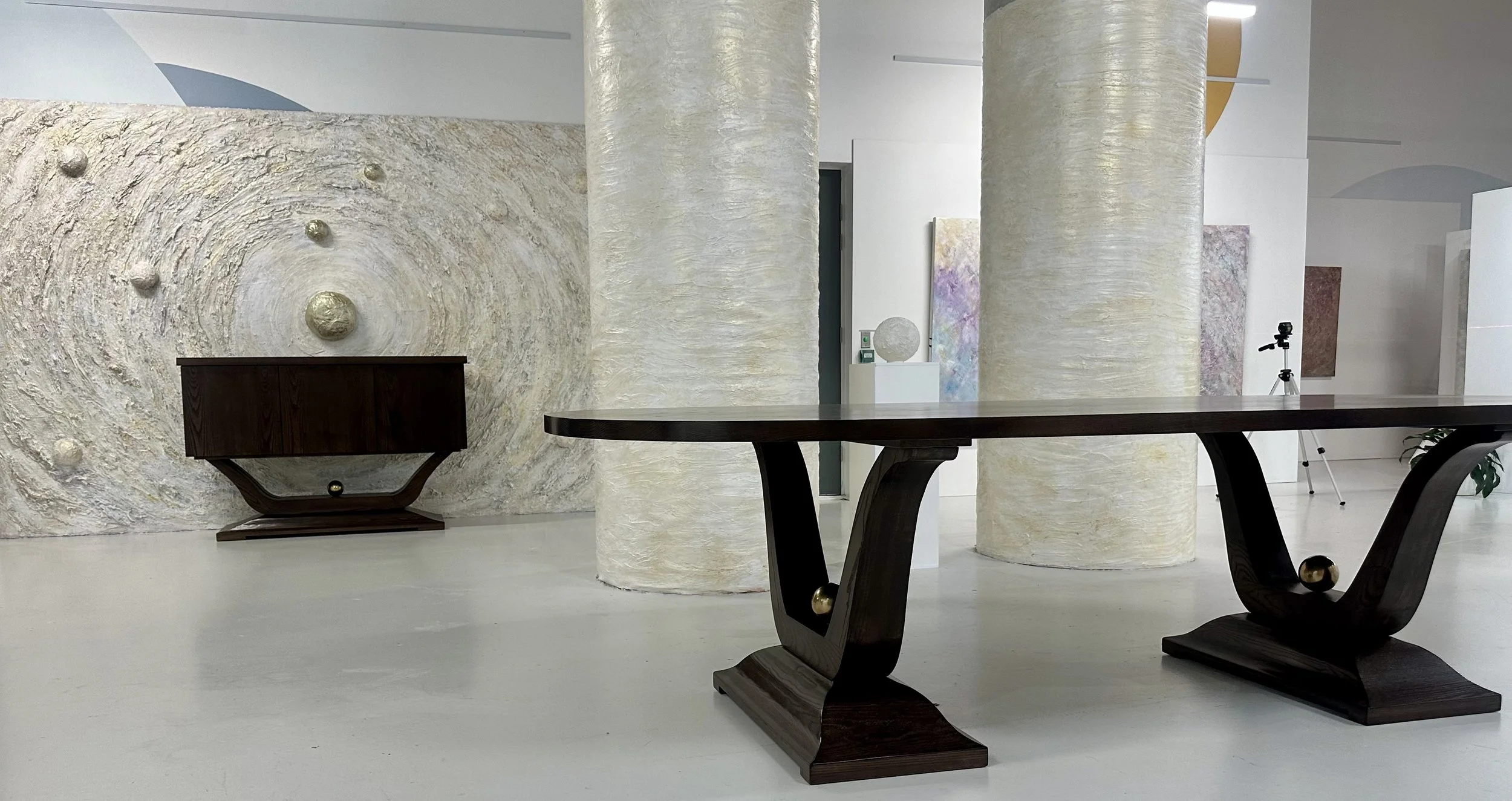
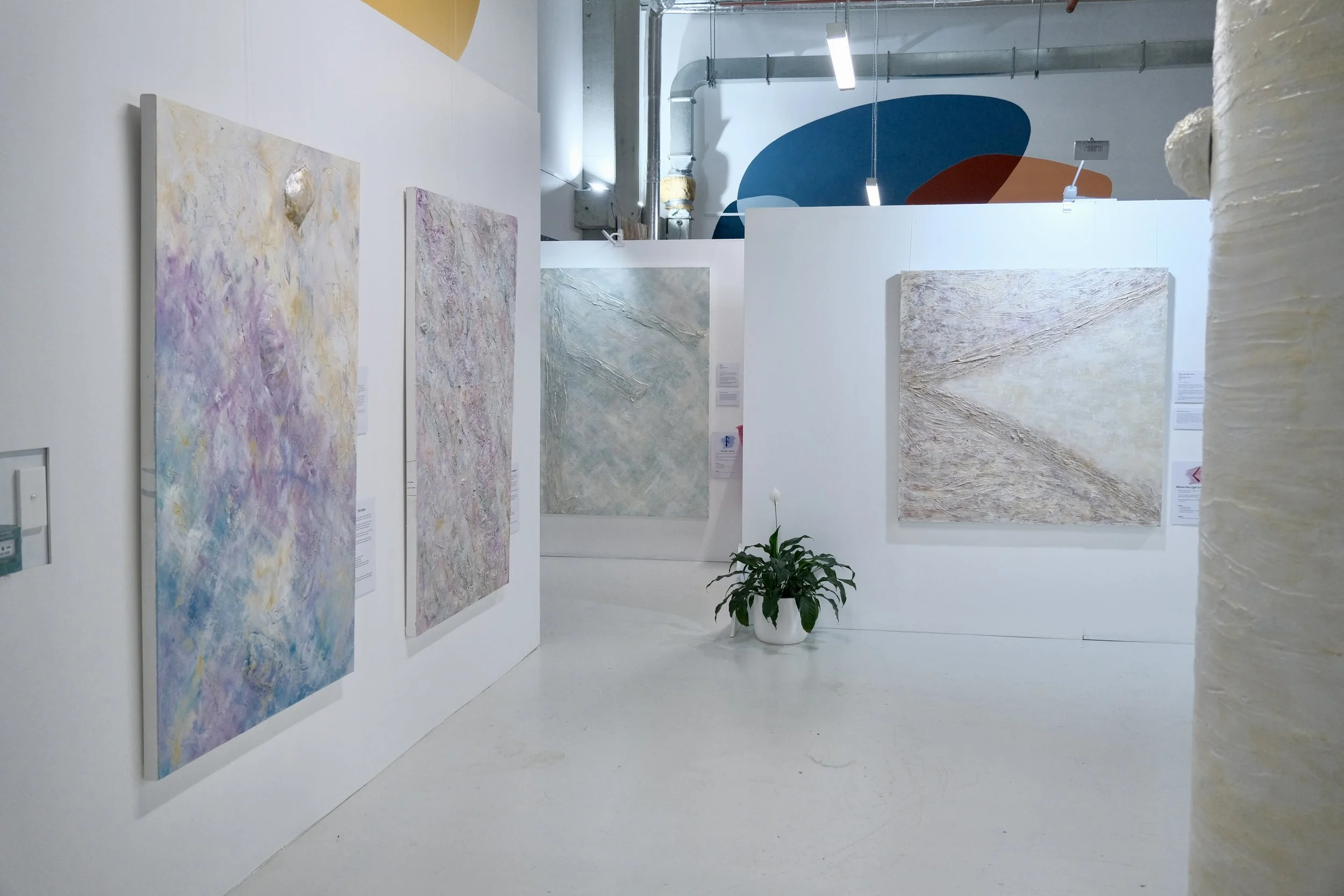
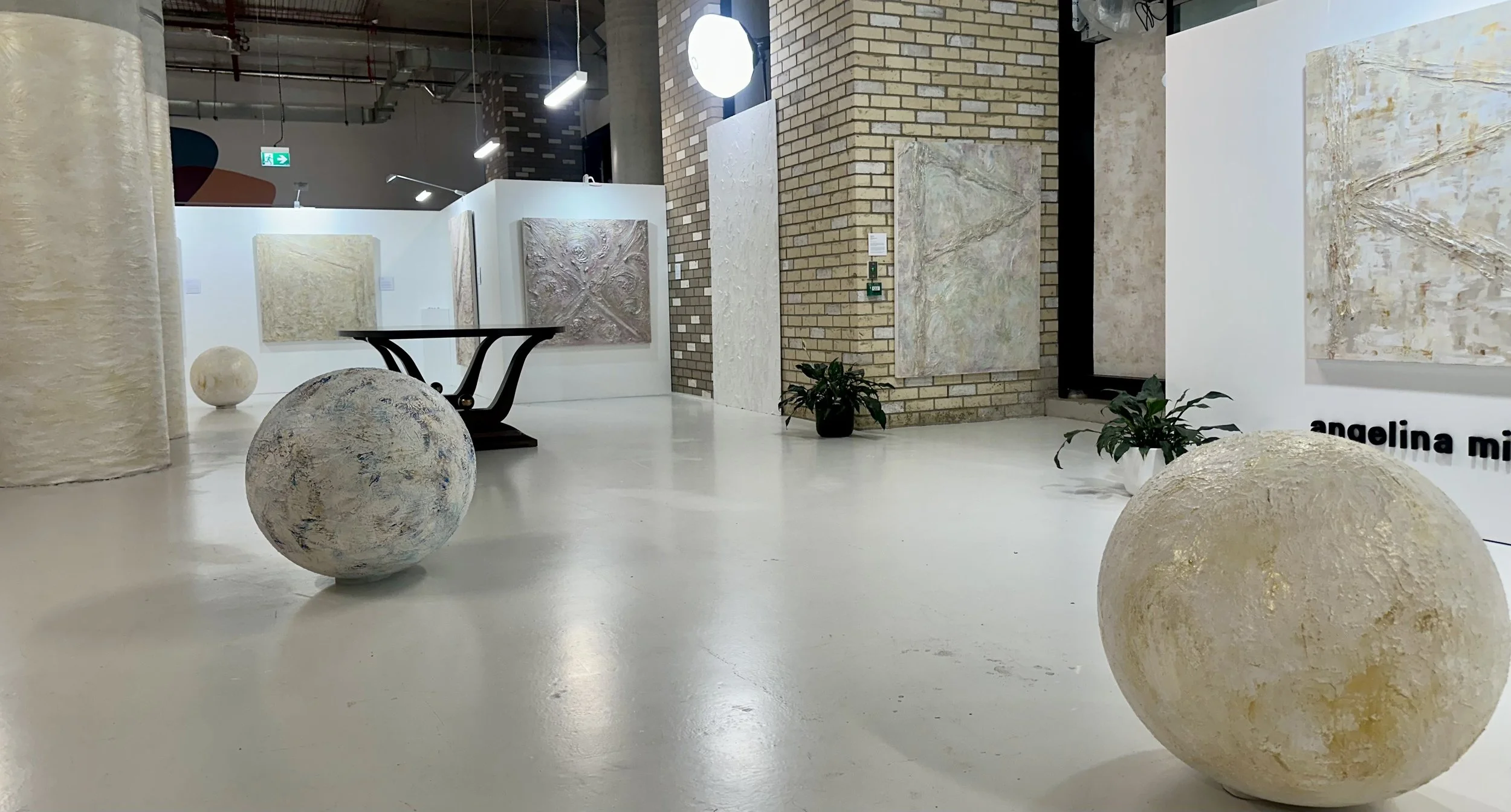
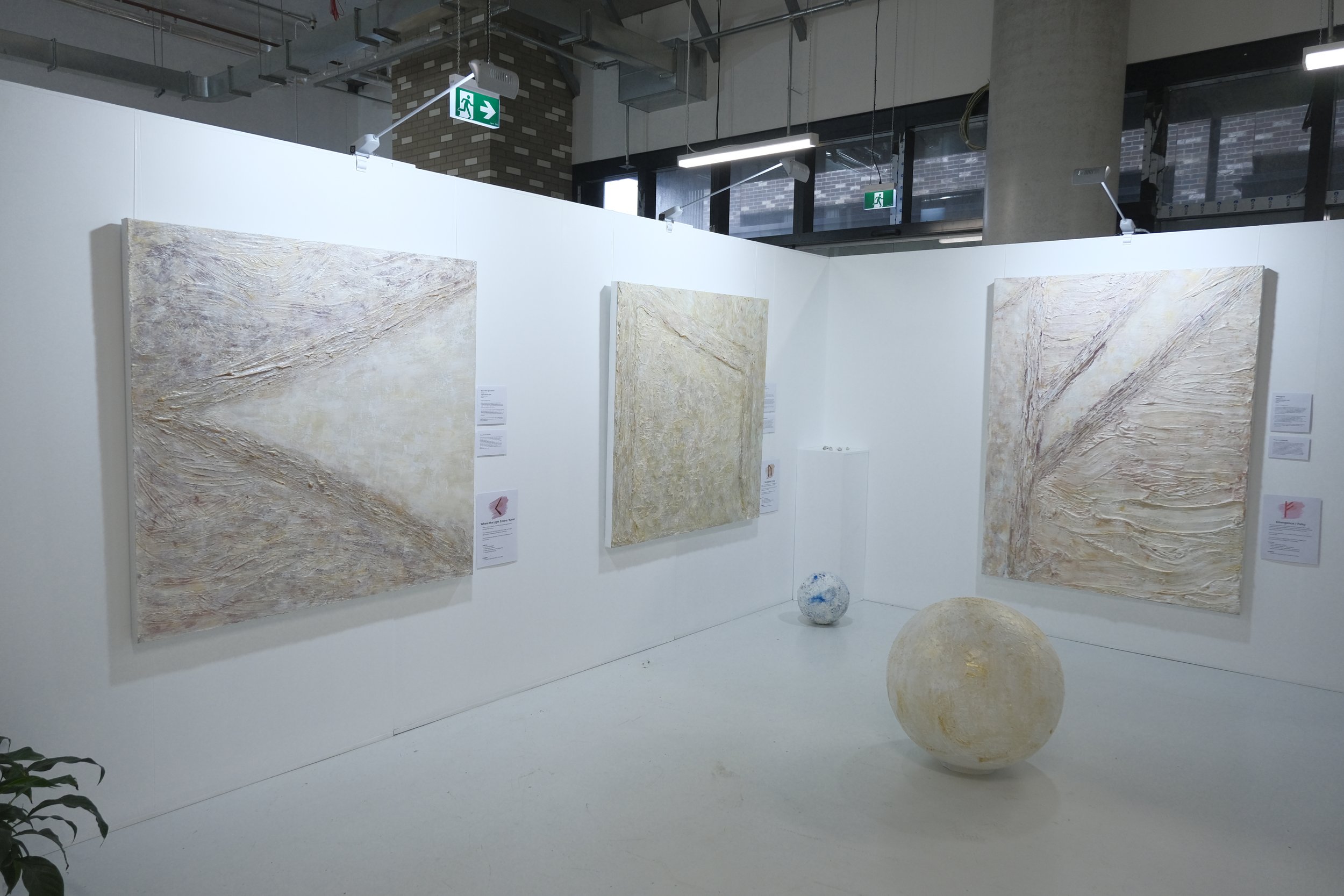
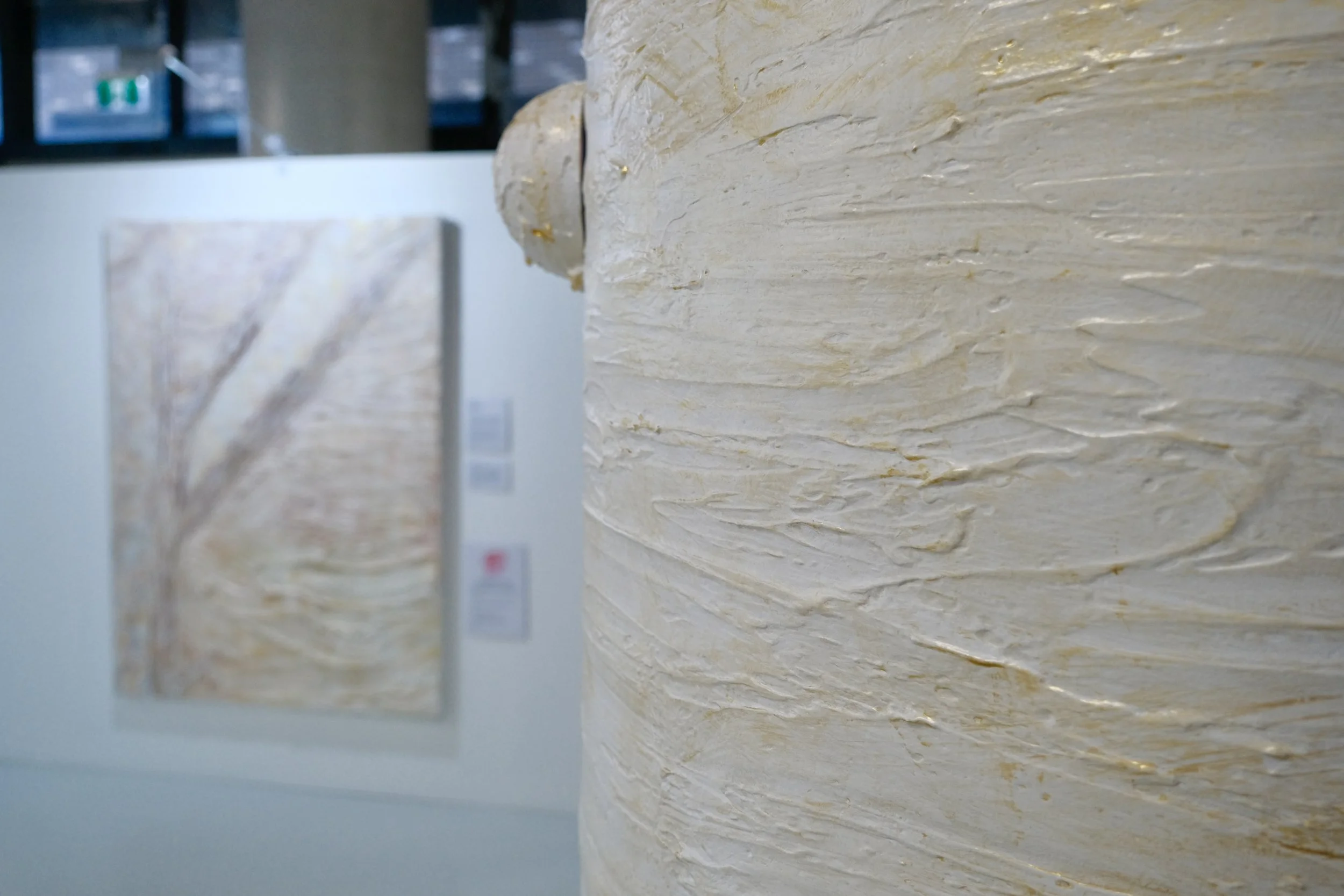
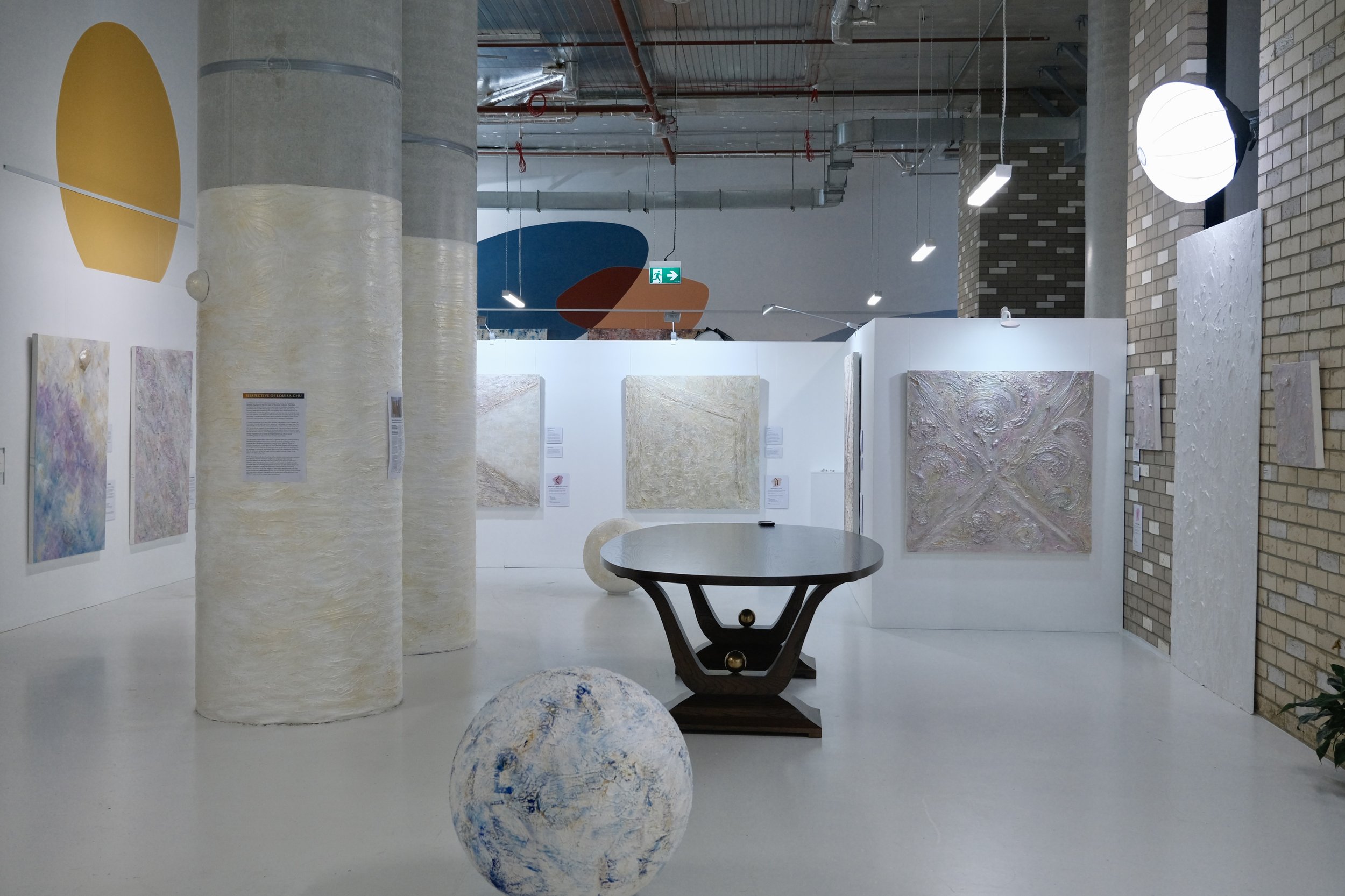
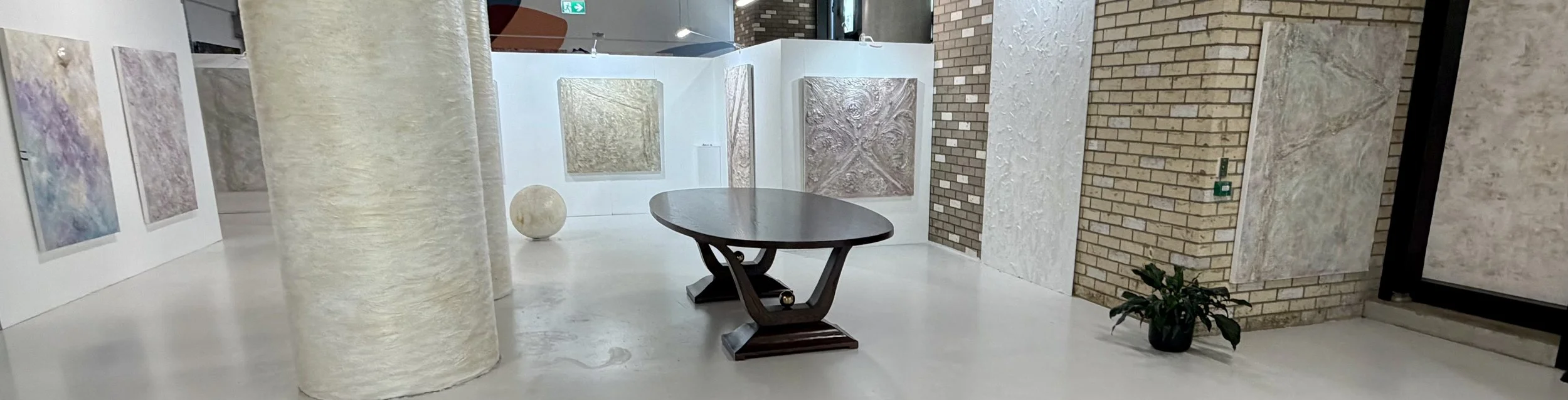
Curational Statement
Angelina Mirabito, PhD
Developed in collaboration with Louisa Chu and Scott Ross.
In Architecture of Emotion, I explore painting as a spatial and emotional structure through which experience can be felt, held, and understood. Across the exhibition, the works operate as interconnected emotional fields that examine how movement, memory, structure, and sensation become embodied through material form.
The exhibition is structured through the first aett of the Elder Futhark, a sequence of runes that describes foundational conditions through which experience emerges and gathers into coherence. Beginning with Fehu and concluding with Wunjo, the works move through activation, formation, boundary, communication, rhythm, illumination, exchange, and alignment. Each painting engages one of these conditions and develops through sustained material engagement over time.
The surfaces are built through layers of texture, gesture, interruption, and reworking. Warm whites, pale mineral blues, dusty rose, mauves, silvers, creams, earthy browns, and golds move across the works in shifting states of density and atmosphere. Directional marks, crossings, pathways, and sweeping gestures create structures that guide both perception and emotional movement through the space.
I understand architecture as the organisation of experience through material presence. Within this exhibition, painting extends beyond the canvas and into the spatial environment itself. The works operate individually while simultaneously forming part of a larger emotional and architectural system activated through movement, proximity, duration, and relation.
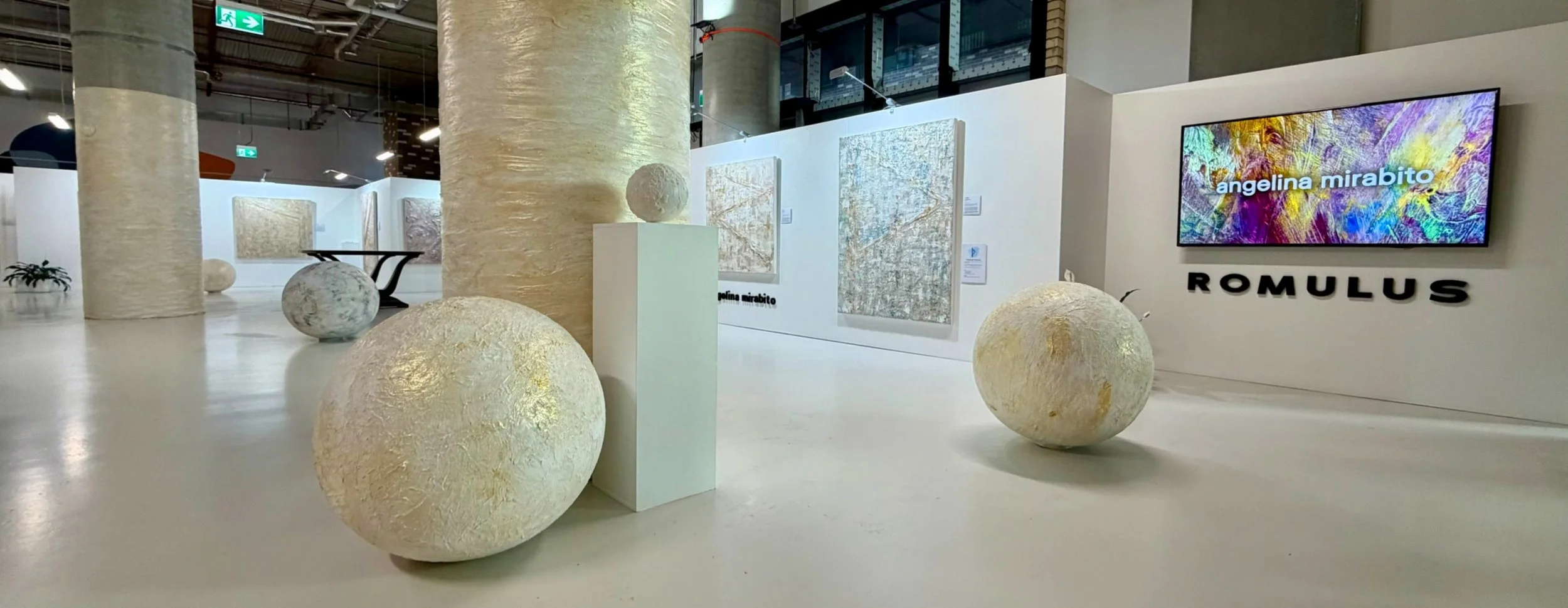
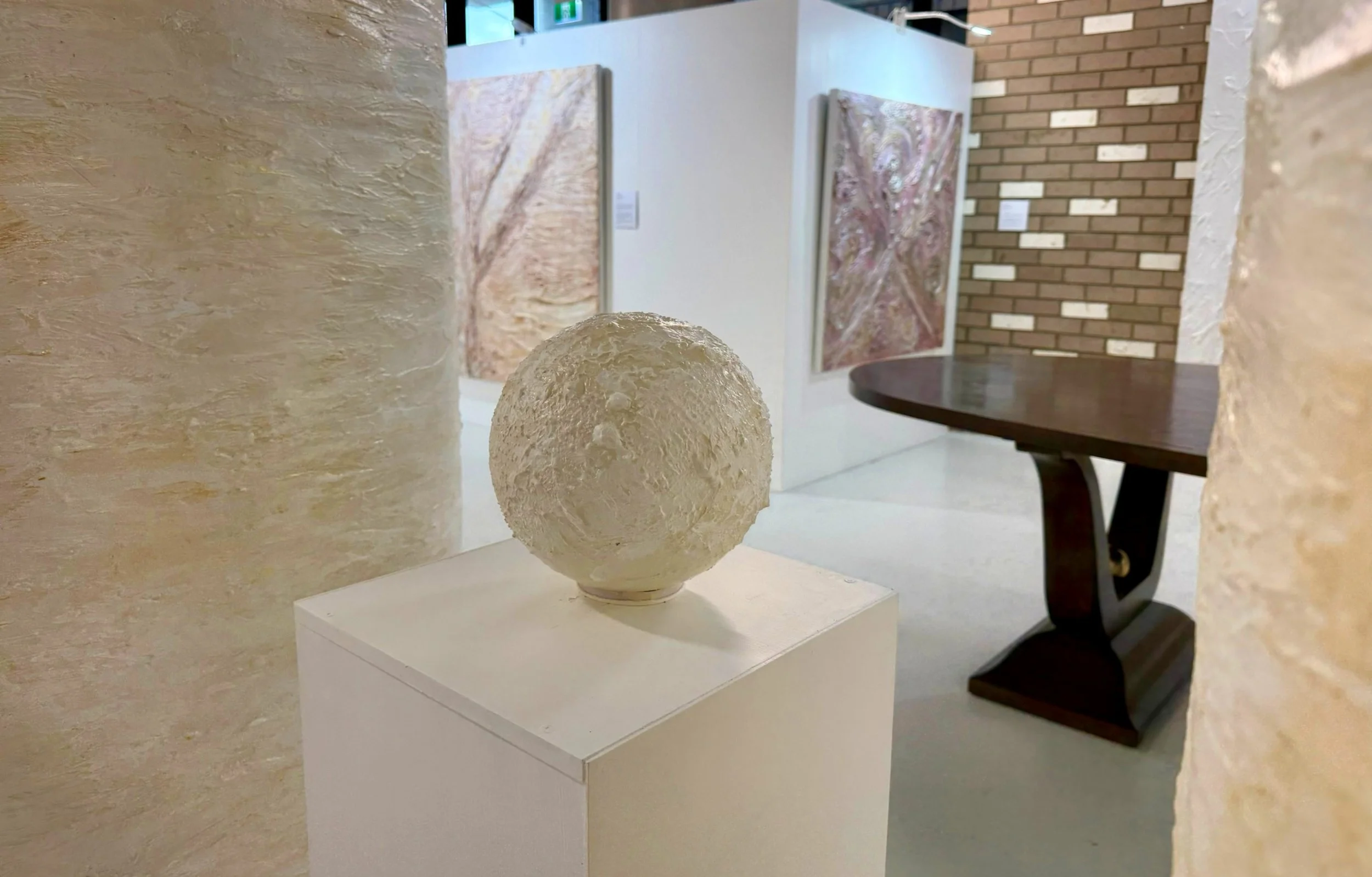
The exhibition expands through a series of integrated spatial interventions. Activated poles wrapped in luminous textured surfaces transform the architecture of the gallery into part of the work itself, while suspended spheres and half spheres emerging from surfaces introduce recurring forms of consciousness distributed throughout the environment. These forms engage emotional resonance, interconnected perception, memory, rhythm, and expanded awareness within space.
The recurring spheres draw from Yayoi Kusama’s immersive spatial language and her use of repeated circular forms to create psychological and perceptual environments that extend beyond the individual artwork into the surrounding spatial experience. Within Architecture of Emotion, the spheres create points of emotional orientation throughout the exhibition, extending the visual rhythm of the paintings into the surrounding environment and reinforcing immersion within a continuous emotional field.
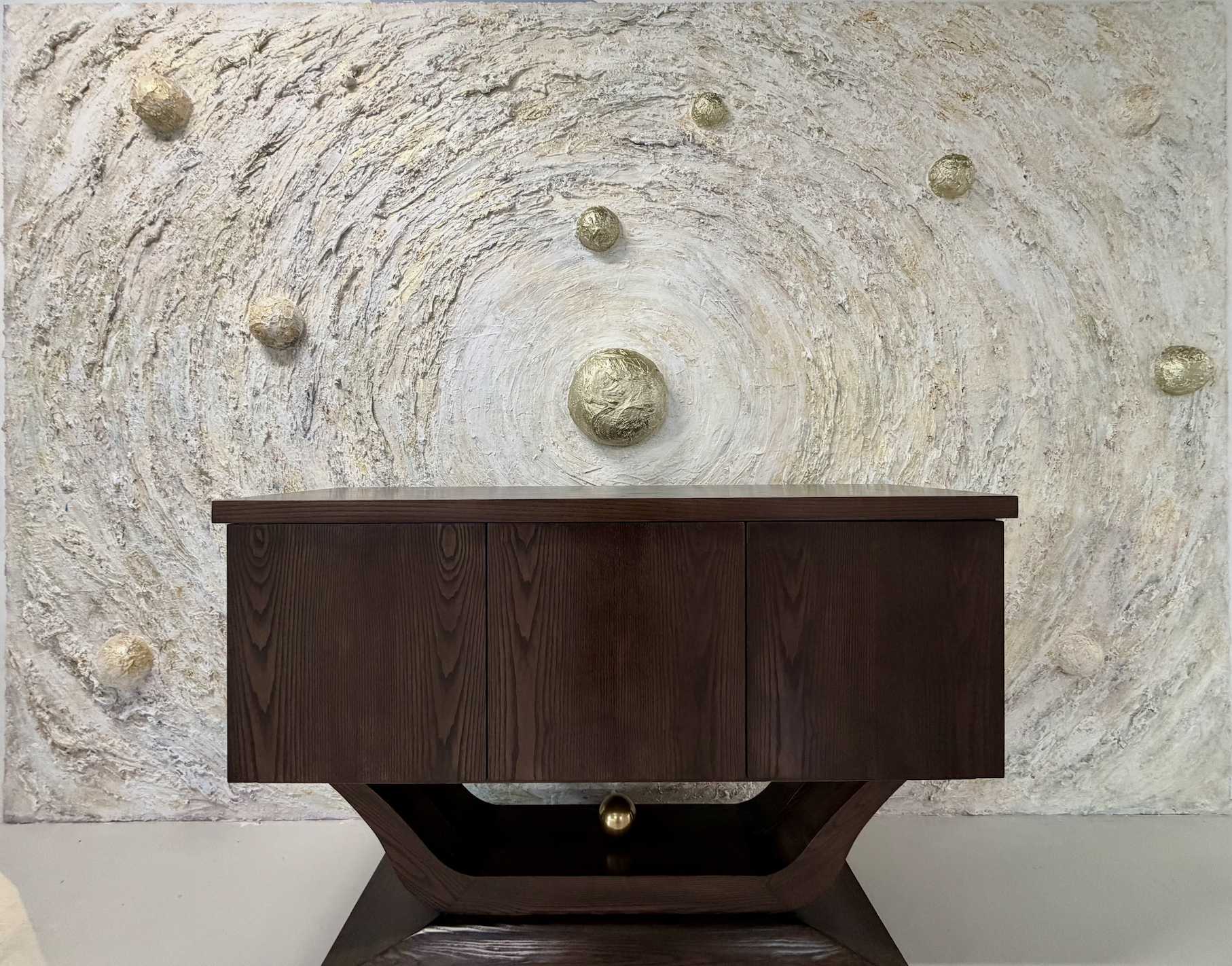
At the centre of the exhibition, the large scale impact wall establishes a radiating field of movement that anchors the surrounding environment.
Custom sculptural furniture by Mark Alexander further extends the exhibition into an immersive spatial experience. His dark timber forms introduce weight, balance, and architectural grounding, creating a dialogue between object, body, and space. Together, the paintings, furniture, spheres, impact wall, and activated columns establish a continuous sensory environment where art, design, and architecture operate as a unified emotional system.
Signature Frequency, Soul Print, and The Fates extend the runic sequence into ongoing conditions of identity, imprint, vibration, memory, and pattern. These works engage the ways emotional experience continues to shape and reorganise itself across time.
Architecture of Emotion presents painting as a structure through which emotional experience gathers, stabilises, and becomes perceptible through material, space, and the body.
Perspective Of Louisa Chu
Master’s in Arts & Culture at the University Of Melbourne
Architecture of Emotion features a painting series by Angelina Mirabito, inspired by The First Aett of the Elder Futhark. The Elder Futhark is the oldest known runic alphabet of Northern Europe. Each rune embodies a different stage and state within an emotional journey, while also revealing the complexity and inexpressibility of emotion itself. Within the gallery space, we encounter emotions that are bold, intense, and fluid, but also those that are restrained, gentle, and calm. A single canvas may carry multiple emotions: they may contradict one another, or reconcile into a sense of harmony.
In Norse mythology, the god Odin gained the wisdom and power of the runes through self-sacrifice. However, although he sees fate, he cannot fully escape it; he understands the order of the universe but still has to move toward its inevitable end. The myth offers another perspective of understanding the artworks within the exhibition. Just like the strokes, colours, and changing structures on the canvas, life is always happening in a state of impermanence. Life is never something that can be predicted or fully controlled.
The dynamics within each painting, together with the other echoing elements throughout the space, remind us that all things in the universe are constantly changing. Things may gather again in circular movement, much like the fluid textures presented through the impact wall and poles, entering a new cycle after an ending. Or, as revealed in some of the works, they may flow elsewhere, moving into an unknown area. Perhaps nothing stays forever: river, time, space, emotion, you, me…
When stepping back and looking at the relationship between people and space, I start to wonder: might our engagement create transformation? As we step into the gallery and start to talk and interact, does the atmosphere of the space begin to shift? As light changes and our viewing perspectives move, do the works begin to appear differently? When we approach the paintings carrying different emotions and the weight of the day’s experiences, do the works unfold with new meanings for us? Could the gallery space itself also become a canvas, allowing us to move and think through it in different ways and to create new narratives?
OPENING NIGHT VIDEO
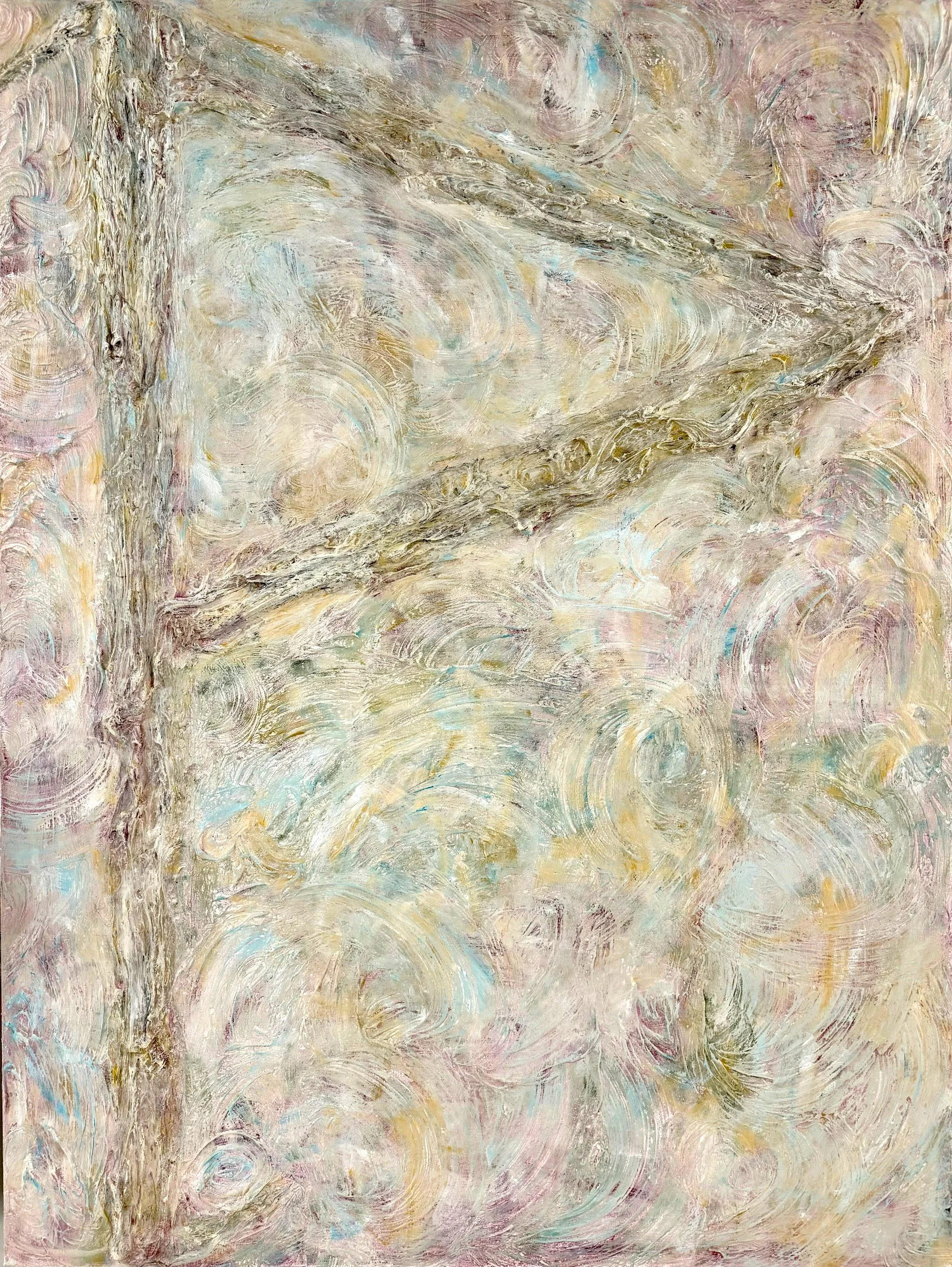
Alignment - Wunjo
Angelina Mirabito
Mixed media on canvas
2026
160cm x 120cm x 5cm
$7500
Alignment engages coherence as a condition in which emotional experience gathers into unity. Wunjo reflects integration, where the elements of a system come into relation and hold together.
The surface brings together movement, texture, and colour into a balanced field. Gestures continue across the work in a sustained and stable manner, allowing the composition to hold as a whole. The painting carries the accumulation of the sequence, resolved into coherence.
The work establishes emotional experience as something that can align and stabilise through integration.
Perspective of Louisa Chu
Wunjo is the last rune of the first Aett of the Elder Futhark. Vibrant colours merge into one another, layered and curving brushstrokes connect across the canvas. The visual language carries a deep sense of love between individuals, allowing joy to be born and grow on the canvas. In this way, the piece conveys the achievement of harmony and fulfilment at the culmination of a creative journey.
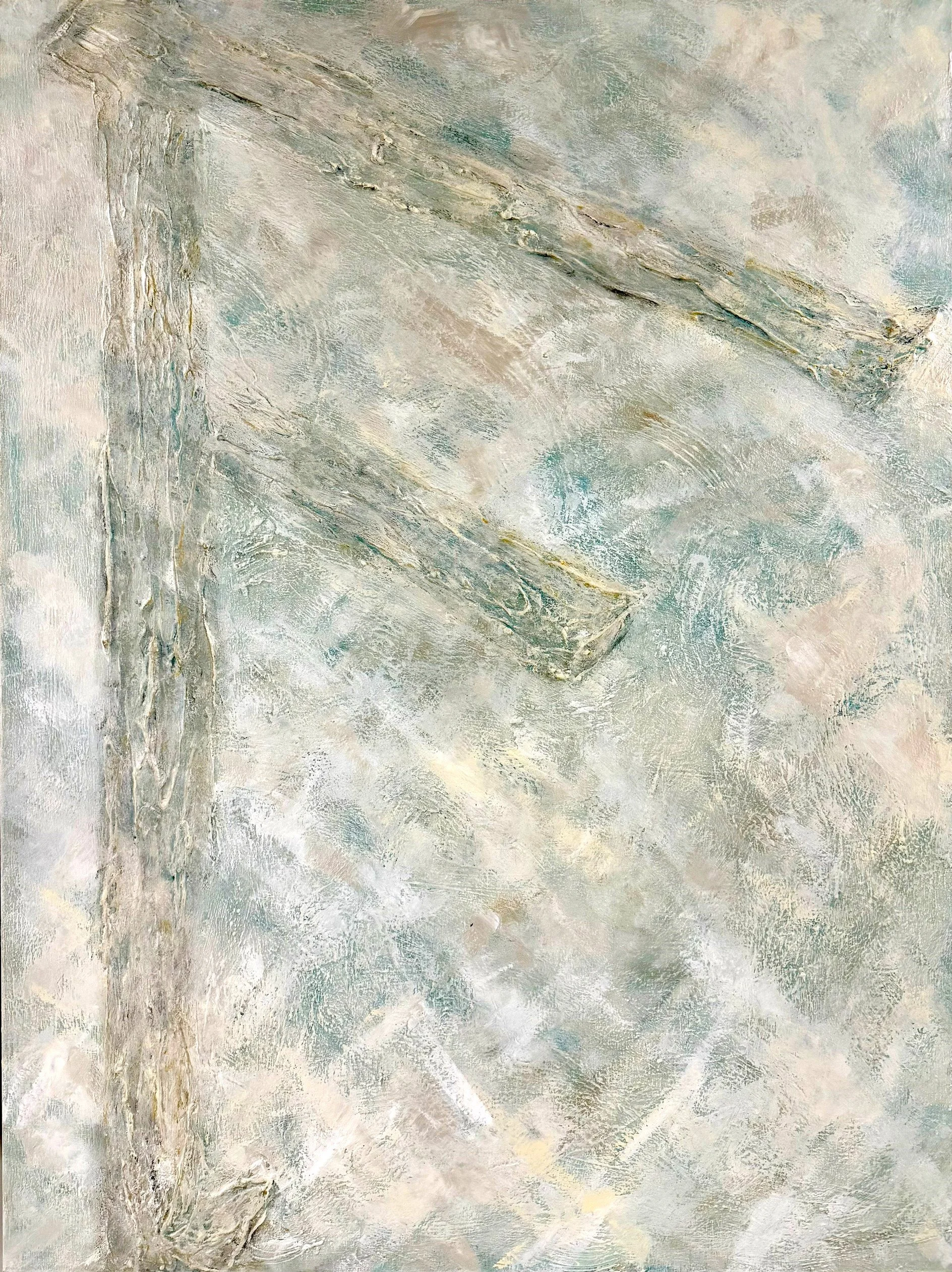
Breath - Ansuz
Angelina Mirabito
Mixed media on canvas
2026
160cm x 120cm x 5cm
$7500
Breath engages the movement of emotional experience through transmission. Ansuz reflects communication, resonance, and the flow of meaning between internal and external states.
The surface opens through lighter layers and fluid transitions, allowing movement to circulate across the work. Texture softens and disperses, creating a sense of permeability. Colour shifts into cooler tonal ranges, holding atmosphere and suspension.
The painting carries emotional experience as something that moves through the body and between individuals, shaped through breath and expression.
Perspective of Louisa Chu
The meaning of Ansuz is the God’s Breath, and the piece unfolds in the way its name speaks. In this work, Mirabito makes her visual language restrained and relatively rational, leaving space and freedom for the viewer to take a pause, contemplate and imagine. Its light, soft textures and fresh palette lift us away from heavy narratives and dense emotions, allowing us to encounter something gentler and find serenity in the embrace of the divine.
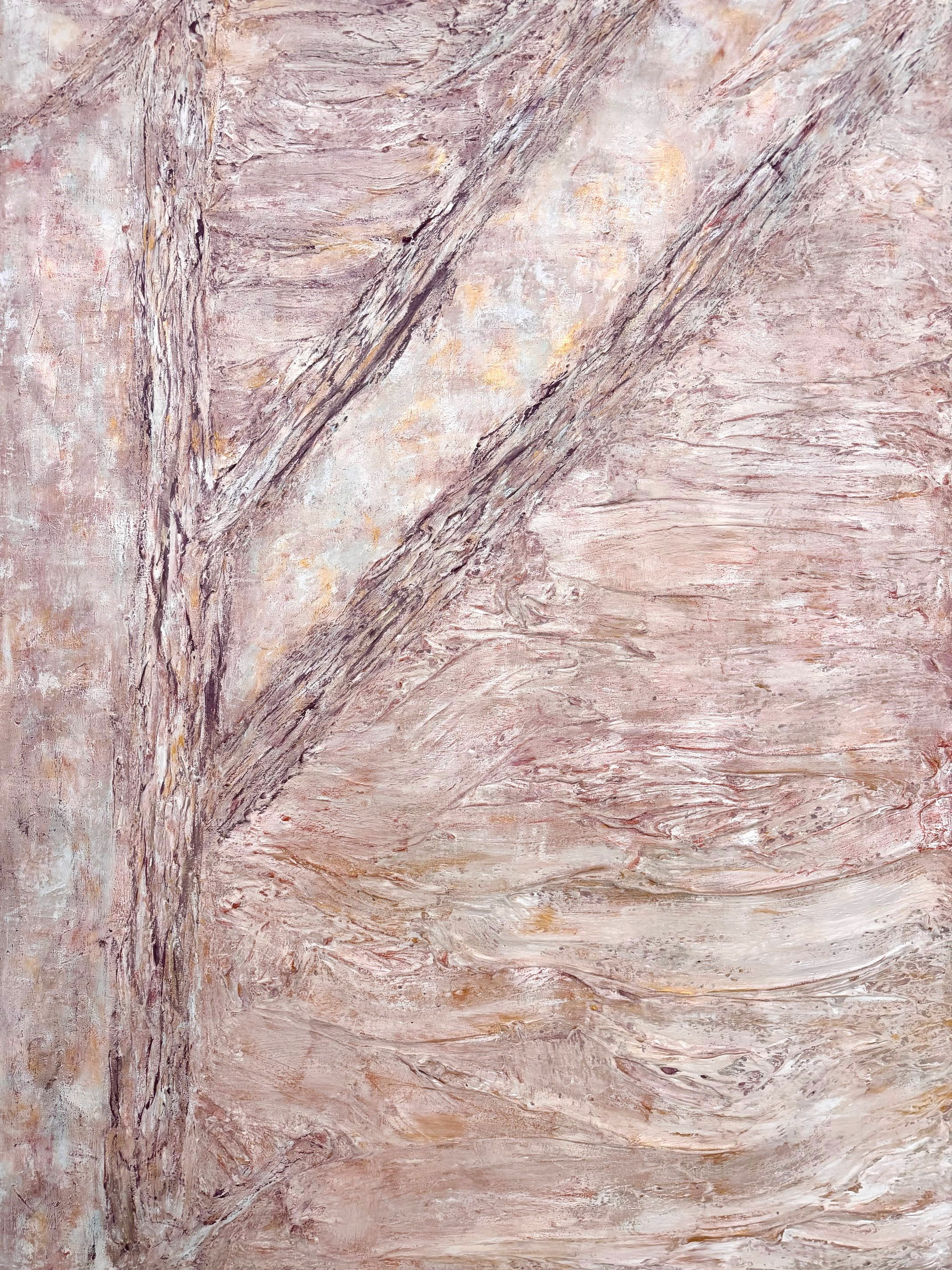
Emergence - Fehu
Angelina Mirabito
Mixed media on canvas
2026
160cm x 120cm x 5cm
$7500
Emergence engages the activation of emotional energy at the moment it begins to move. Fehu describes a condition in which intensity circulates before it stabilises into form. Emotional experience appears here as movement, as a force that gathers through interaction and begins to generate structure.
The surface develops through layered directional gestures that move across the canvas, creating a sense of expansion and propulsion. Colour holds warmth and density, carrying the energy of initiation. Earlier layers remain present within the work, contributing to a depth that reflects accumulated experience.
The painting holds the moment in which feeling becomes active, where energy begins to organise itself through engagement.
Perspective of Louisa Chu
Orange and pink tones, interwoven with touches of gold, echo the fiery, creative raw energy represented by the rune Fehu. Long, bold, and heavy brushstrokes add a strong sense of movement to the work, reminding us of the ceaseless river flow, full of raw vitality. The flowing river leads our gaze beyond the canvas, leaving a sense of openness and uncertainty. The visual extension not only symbolises a continuous prosperity that may last across centuries, but also hints at the universal flux: all things pass, and nothing stays. As Heraclitus believed, you cannot step twice into the same river.
Threshold - Thurisaz
Angelina Mirabito
Mixed media on canvas
2026
160cm x 120cm x 5cm
$7500
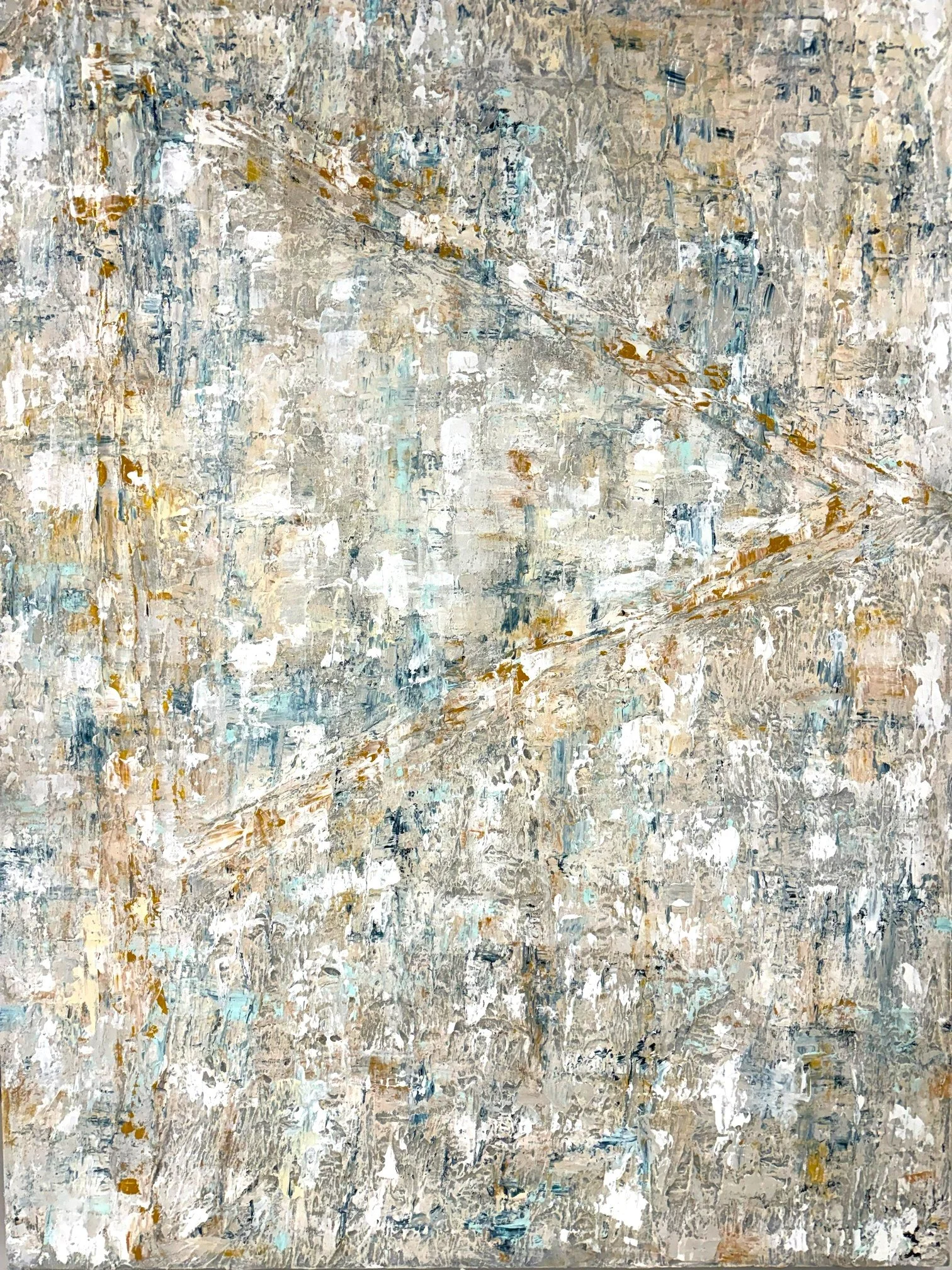
Threshold engages boundary as a condition that shapes emotional experience. Thurisaz reflects the moment in which force is directed, forming distinction and allowing relation to occur through structure.
The composition is defined through a strong directional division that concentrates energy along its axis. Material gathers and shifts across this boundary, creating tension that holds the work in balance. The surface carries both density and clarity, reinforcing the presence of structure.
The painting establishes honouring one's boundaries as a generative force, shaping how emotion is experienced and contained.
Perspective of Louisa Chu
The visual elements convey an energy of chaos, within which we encounter struggle, challenge, confusion, vulnerability, and unease. In contrast to the work on the left, Passage, Threshold presents a more disruptive force. The palette knife and brushwork, together with colours, blur the path of the rune Thurisaz, symbolising an exploration of limits and a breaking of order. After destruction comes freedom, and new rules begin to emerge.
Exchange - Gebo
Angelina Mirabito
Mixed media on canvas
2026
120cm x 120cm x 5cm
$5500
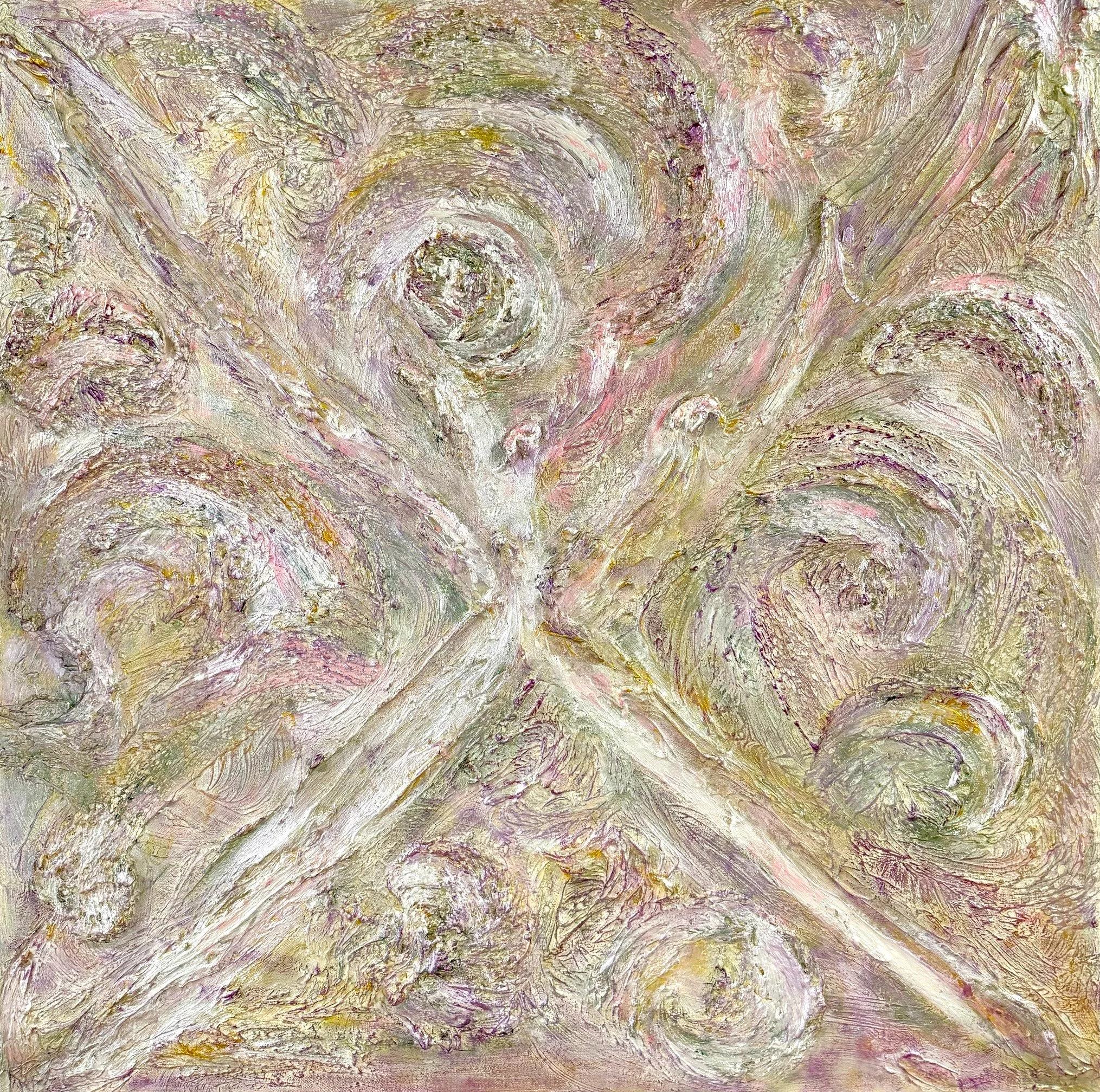
Exchange engages relation as a condition through which emotional experience is shaped. Gebo reflects reciprocity, connection, and the dynamic of giving and receiving.
The composition is structured through intersecting movements that create points of contact across the surface. These intersections establish a field of interaction, where elements remain distinct while held in relation. Texture and colour reinforce this balance.
The painting holds emotional experience as relational, formed through exchange between self and other.
Perspective of Louisa Chu
When viewed up close, the rich colours intertwine, reminding us of springtime. Colours and textures meet, collide, and connect, while the intensity of emotion seems to almost spill beyond the canvas, expressing a generous way of giving. Yet when we step back and take in the work as a whole, the composition reveals a sense of harmony and stability, talking to the rune Gebo and its idea of balance in exchange. It seems that all the movement and emotion are still unfolding within a certain order, governed by a rhythm that cannot be escaped.
Formation - Uruz
Angelina Mirabito
Mixed media on canvas
2026
120cm x 120cm x 5cm
$5500
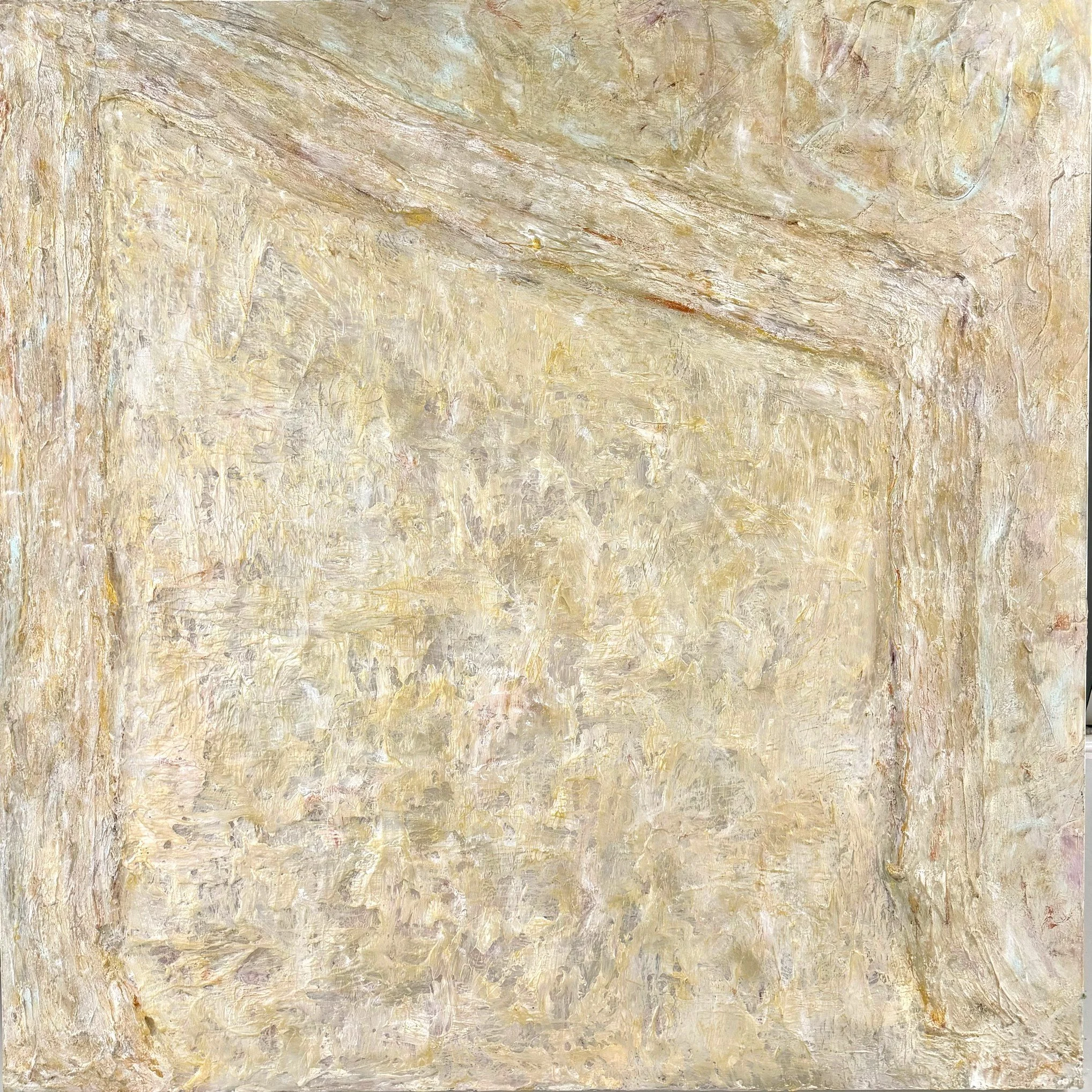
Formation engages the consolidation of emotional experience into a state that can be held. Uruz reflects embodied presence, where energy gathers into strength and stability.
The work condenses movement into density, creating a surface that holds weight through internal structure. Texture builds through pressure and repetition, forming a field that feels grounded and contained. The palette draws on mineral tones that reinforce a sense of material presence.
The painting establishes emotional experience as something that can be carried, held within the body and sustained over time.
Perspective of Louisa Chu
The rune Uruz symbolises the enduring strength of Niflheim, the homeland of primordial darkness and ice in Norse mythology. In this work, we see irregular, disorderly brushstrokes, as if expressing struggle and disorientation within chaos in Niflheim. Yet we also see hope: warm yellows and earthy tones tell a story of resistance, an attempt to overcome coldness and darkness. The inevitability of endings and sufferings is then transformed into resilience, leaving open the possibility of new life and new beginnings.
Passage - Raido
Angelina Mirabito
Mixed media on canvas
2026
120cm x 120cm x 5cm
$5500
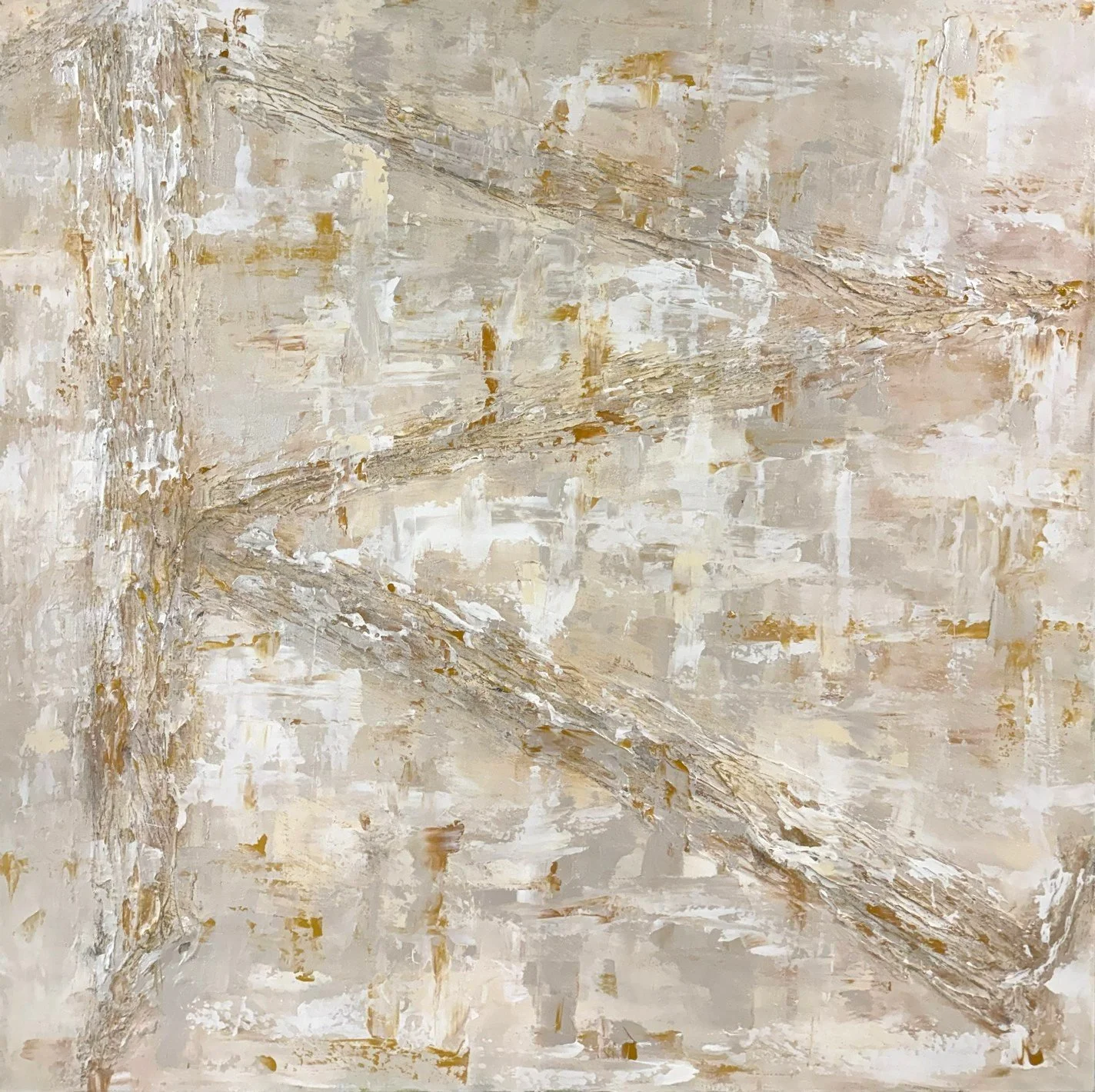
Passage engages continuity as a condition through which emotional experience is sustained. Raido reflects movement structured through rhythm, allowing feeling to unfold across time.
The surface develops through repeated gestures that create pathways across the canvas. These movements establish a sense of direction and pacing, allowing the work to hold continuity. Texture reflects the accumulation of action, while the palette remains grounded and cohesive.
The painting establishes emotional experience as a journey, shaped through rhythm and progression.
Perspective of Louisa Chu
Colour blocks jump and interplay across the canvas, revealing the uncertainty and multiplicity of our life journey. From the visible path mapped by the rune Raido to the thoughtful palette knife strokes that unfold across the rest of the canvas, there lies a rhythm beneath complexity, signifying an inevitable order in the universe. The rune Raido invites us to trust the journey, where we may seek to explore, endure, accept or resist it, but we can never fully control it.
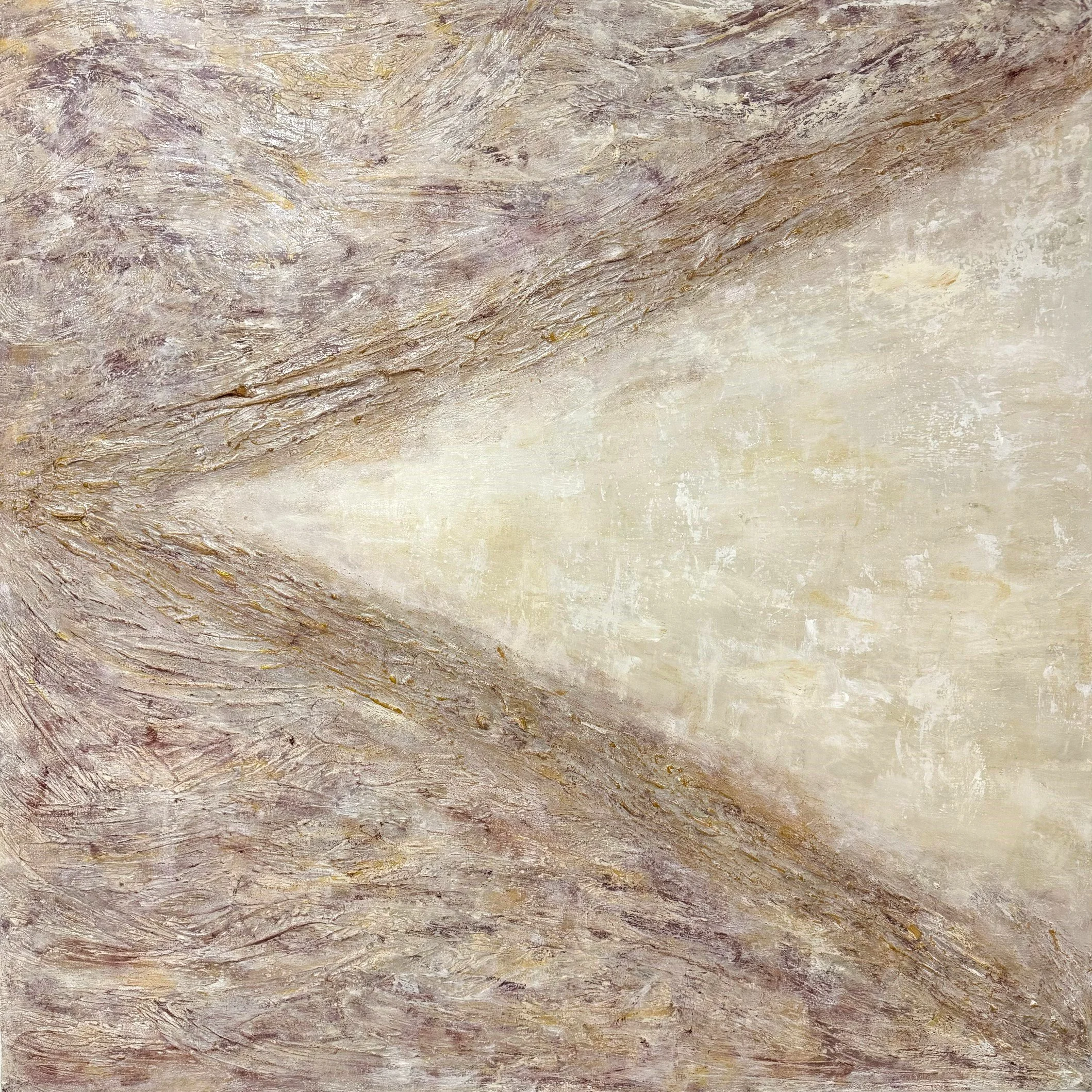
Where the Light Enters - Kenaz
Angelina Mirabito
Mixed media on canvas
2026
120cm x 120cm x 5cm
$5500
Where the Light Enters engages illumination as the condition through which emotional experience becomes visible. Kenaz reflects clarity, awareness, and the capacity to perceive structure within feeling.
The work develops through contrast and exposure, allowing light to emerge across the surface. Layers shift between density and openness, revealing underlying formations. The composition holds a balance between concealment and revelation.
The painting carries the moment in which understanding forms, where emotional experience becomes perceptible through attention.
Perspective of Louisa Chu
Kenaz is the rune of heat and light. Portrayed through thick textures and dynamic brushstrokes, the work evokes a burning, moving flame that speaks of warmth and transformation. A gentle light enters from the right side, symbolising illumination and inspiration. When fire meets light, the surrounding energy and hope guide us through darkness. However, there is also an emerging force that appears out of control, making us curious and uncertain about what comes next.