
BENEATH ONE MOON |Peace and togetherness between us
7 October 2026
Written by Zic Liu
Last week, we visited Creative Asia Art Centre to see the group exhibition Beneath One Moon.
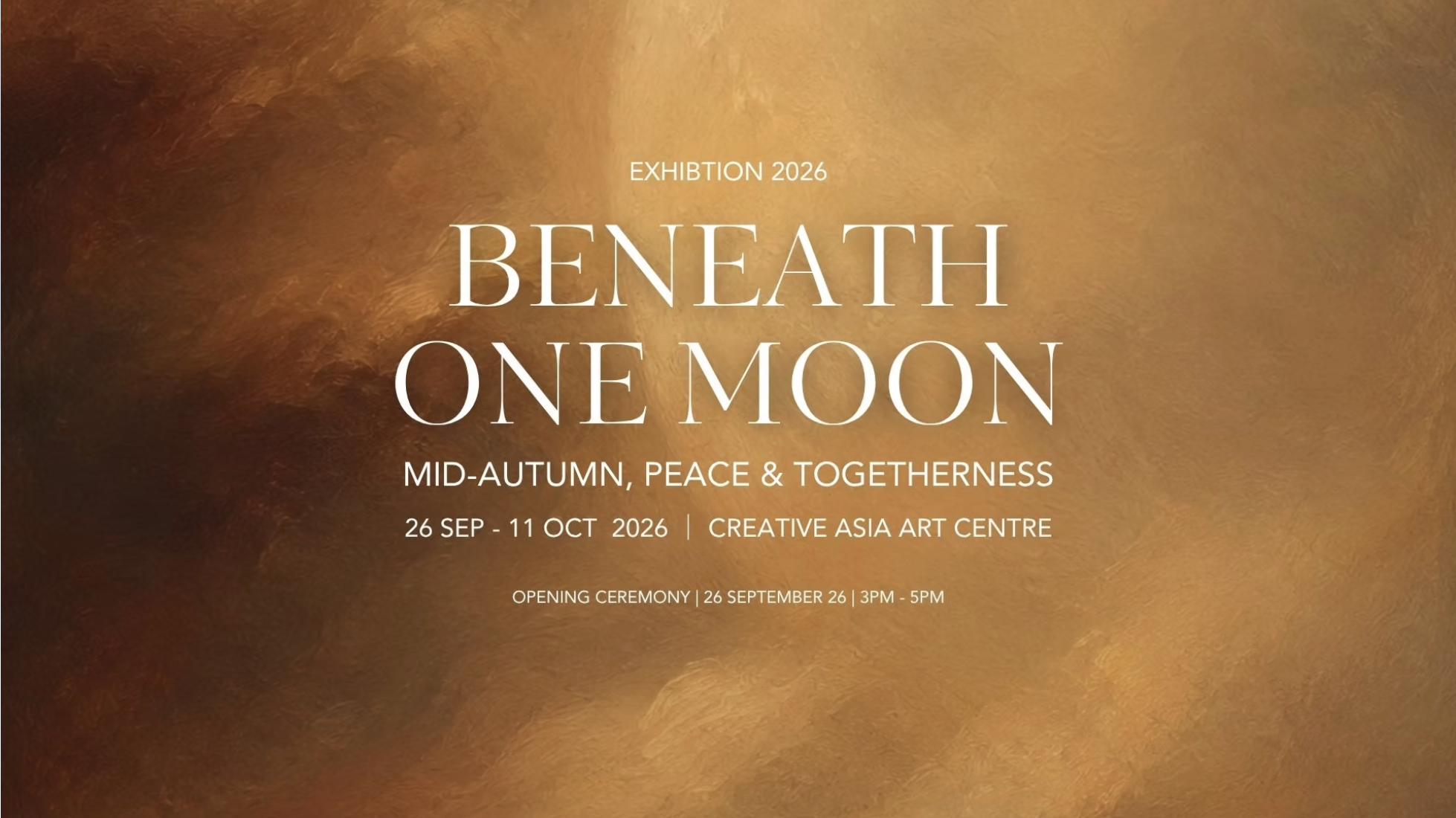
Taking the Mid-Autumn Festival as its cultural background, the exhibition begins with the familiar image of the moon and extends its meanings of reunion, family and longing into broader conversations about culture, identity, belonging and human connection.
The moon has been closely connected with the idea of reunion in Chinese culture. During the Mid-Autumn Festival, people gather with family and friends, share mooncakes, admire the full moon, and think about loved ones who cannot be with them. In Beneath One Moon, the moon becomes something that connects everyone. No matter where we come from or how different our backgrounds may be, we all live under the same sky.
This idea of distance and connection is also something artist Angelina Mirabito wanted to explore through this exhibition. She mentioned that for people who have experienced migration, ‘home’ does not exist in only one place. Someone can build a life in a new city while still carrying memories of family, childhood and culture from somewhere else. In this way, the idea of home can extend across countries and generations.
This idea can also be seen in Angelina’s two works in the exhibition, Passage: Raido and Formation: Uruz. Both works are part of a series inspired by the First Aett, the first group of eight symbols in the ancient runic system, associated with ideas of foundation and the beginning of a journey. Within this system, Raido relates to movement and journey, while Uruz is associated with strength and formation.
When I first saw the two works displayed together, I was drawn to their similar use of colour. White, cream, mineral tones and subtle traces of gold give the paintings a quiet feeling. However, when viewed more closely, their surfaces are actually very detailed. Layers of materials, folds, marks and irregular textures build up across the canvases, giving the works a strong physical presence.
Passage: Raido explores how emotional experience can continue and move forward over time. Movement is gradually created through repeated gestures and rhythmic marks, while the textures extend across the surface and form pathway-like structures that guide the viewer’s eye through the painting. The accumulated textures record the process of these repeated actions, while the grounded and consistent palette keeps this movement connected as a whole.
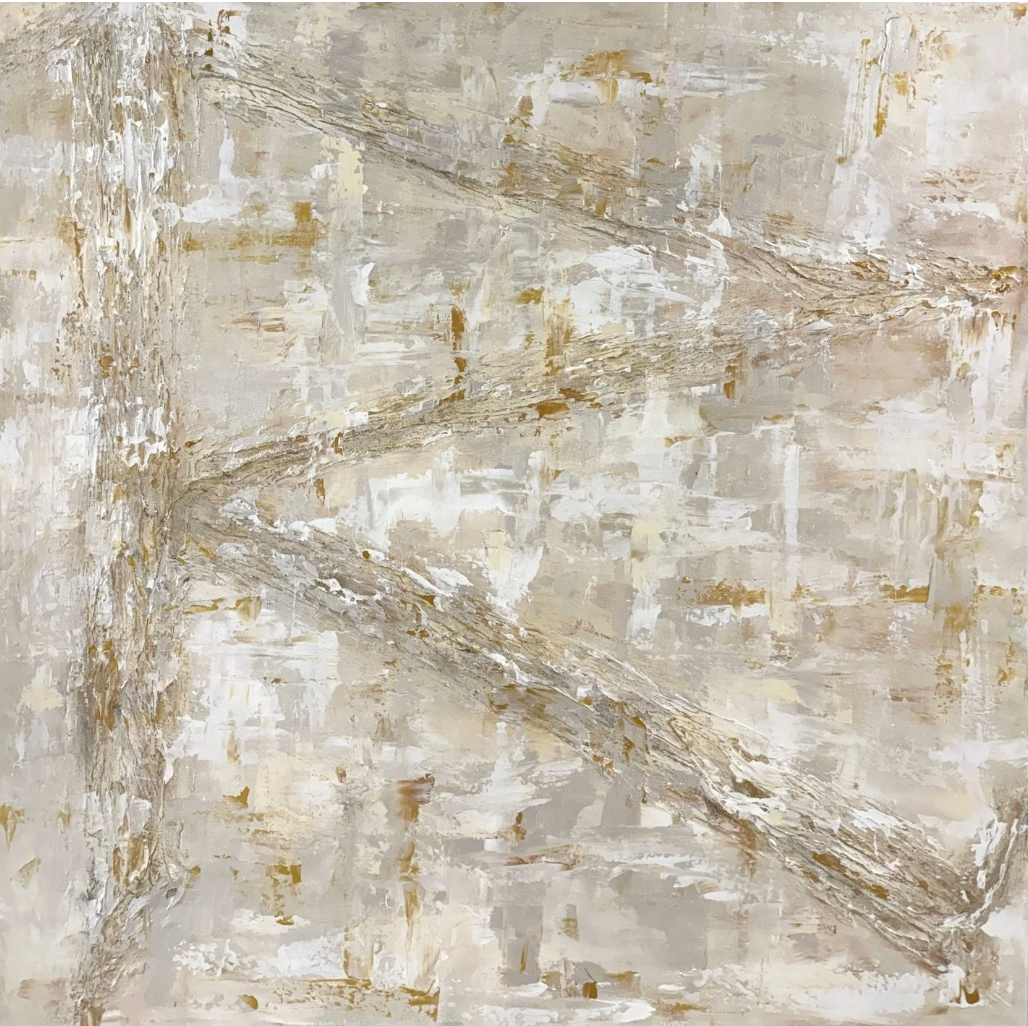
Passage: Raido, Angelina Mirabito, 160 x 120 x 5 cm, archival mixed media on Belgian linen stretched on aluminium frame, 2026, $5500
Because of this, it is feels like a journey that continues to unfold. Emotion moves forward through time, gesture and rhythm, maintaining a sense of continuity even as it changes. In this sense, ‘passage’ is about how an experience can continue and develop over time.
In Formation: Uruz, this moving emotional experience seems to gradually settle and take shape. Through linen, repeated marks and dense textures, energy gathers within the surface of the painting. While Passage: Raido focuses more on direction and rhythm, Formation: Uruz explores how strength can slowly develop and become stable. Its mineral tones and heavier surface also give the work a stronger sense of weight and stability.
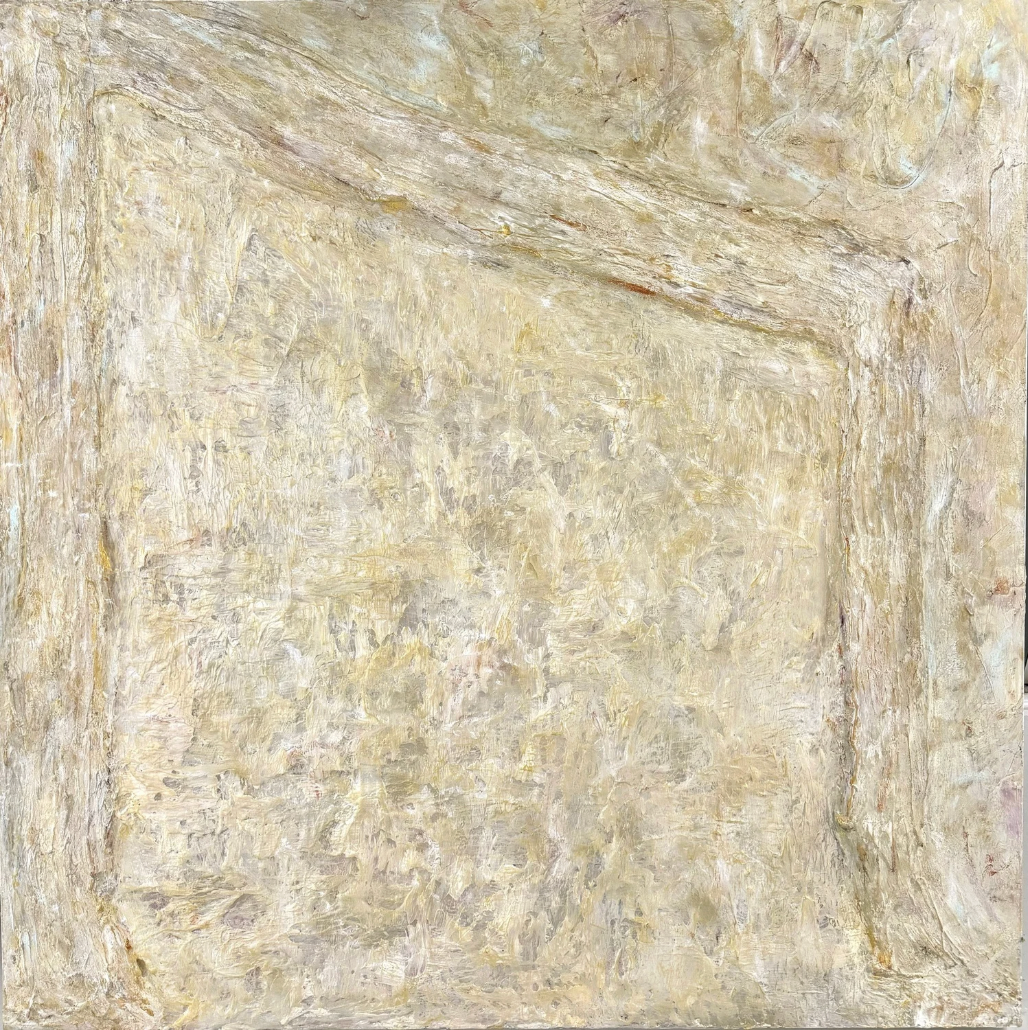
Formation: Uruz, Angelina Mirabito, 120 x 120 x 5 cm, archival acrylic and mixed media on Belgian linen stretched on aluminium frames, 2026, $5500
When the two works are viewed together, there is a natural connection between them. Passage: Raido moves forward through movement, rhythm and progression, while Formation: Uruz reflects the strength and stability that can form through the accumulation of experience. One allows emotion to continue unfolding through time, while the other gives those experiences a sense of weight and form.
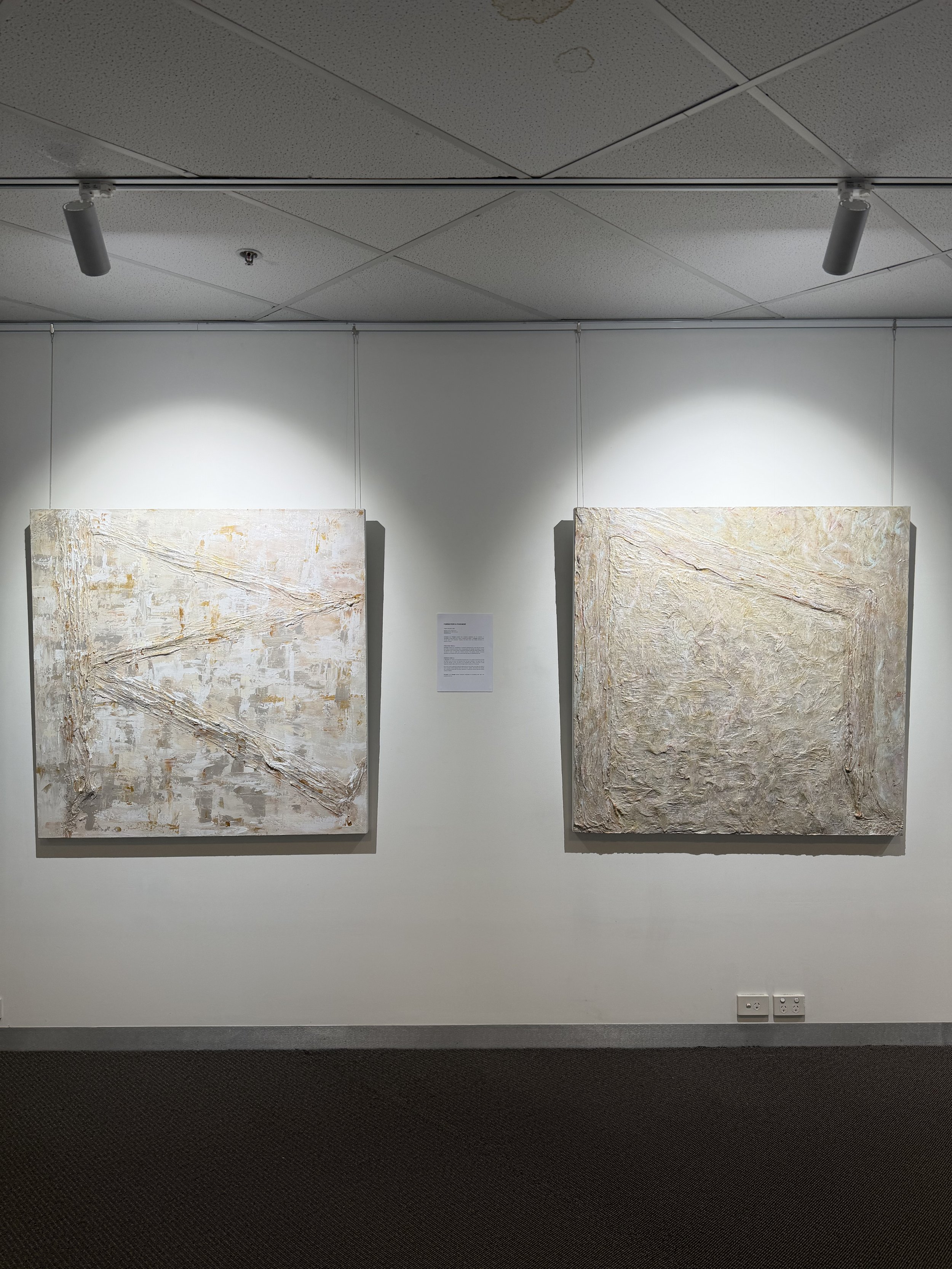
In both works, emotion becomes part of the materials and the making process itself. Angelina also believes that true ‘togetherness’ does not mean that everyone needs to become the same. Instead, it should leave space for difference. People can keep their own cultures, experiences and stories while still finding ways to connect with one another.
This also gives the moon in Beneath One Moon a more contemporary meaning. Just as this two works, which draw on the symbolism of the ancient runic system. While the moon carries meanings of reunion and connection in Chinese culture, Raido and Uruz bring ideas of movement, continuity, strength and foundation from a different cultural tradition. Through contemporary art, these ancient symbols can move beyond their original cultural contexts and connect with experiences that remain relevant today. They keep their traditional connections to reunion, longing and home, while also opening up conversations around migration, identity, belonging and cultural exchange today. The exhibition creates a space where different stories can exist together, remaining different, also creating opportunities for understanding and connection.
Creative Asia Art Centre (CAAC)
Level M, 18/38 Siddeley St, Docklands VIC 3008
Monday - Friday: 12PM - 5PM
