
Founding as Artistic Practice: Romulus Folio at The Gladstone
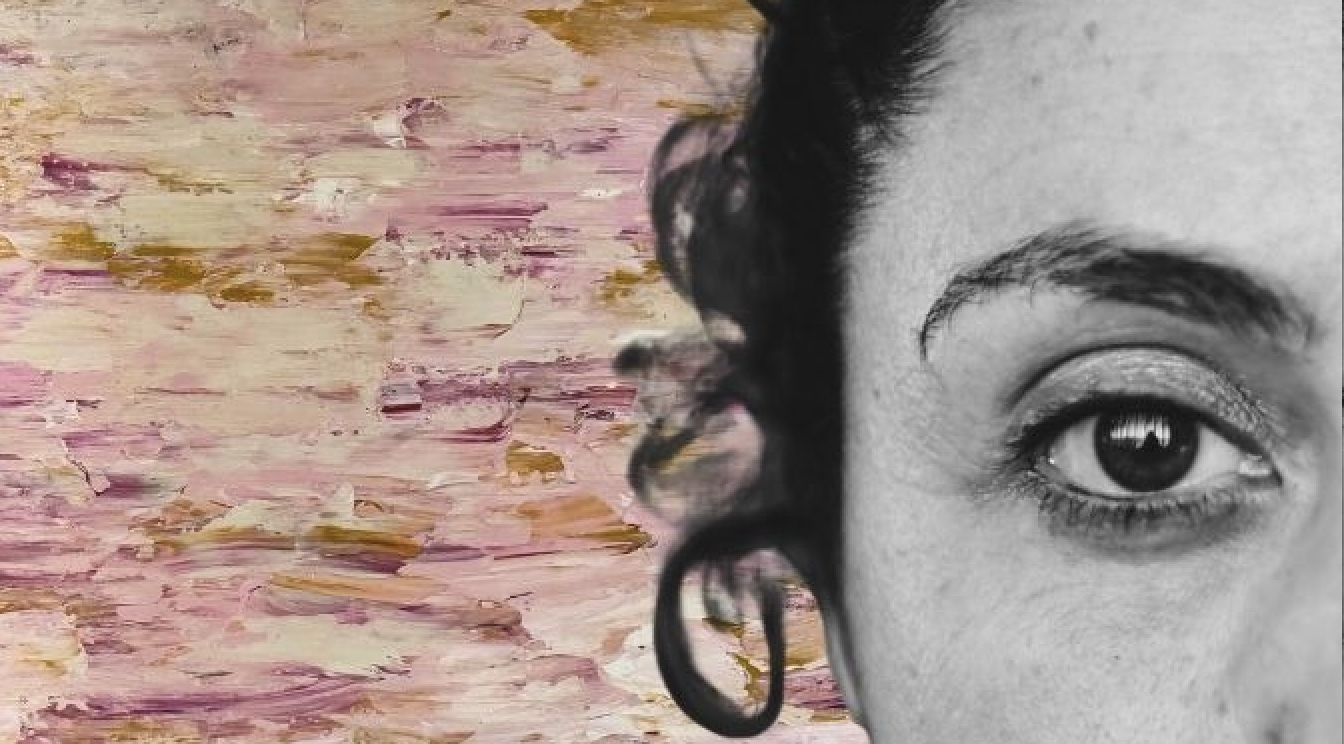
by Angelina Mirabito, PhD
Romulus Folio began as an instinct rather than a gallery. A need to make art, to be inside art, to live within spaces shaped by colour, texture, and the emotional intelligence of material. I never set out to build a public program. I set out to make work. But over time, I realised the space itself was becoming a work of art.
The Romulus myth stayed with me because it’s a story about the first line. The moment where a world begins. The moment where someone decides to shape a place into coherence. That act of founding isn’t administrative. It’s creative. It’s an artwork.
The She Wolf as Method
Under every beginning in myth there is a protective force that ensures the beginning can happen at all. In the Romulus story, that force is the She Wolf. I recognise that universally inherent energy within each of us, as a larger-than-life compulsion propelling me forward, particularly now. It’s the instinct to guard the clarity of a vision before it has language, to protect the fragile beginning from being taken, redirected, or co-opted.
My work emerges from this same instinct. The need to create. The need to be in the presence of art. The need for beauty in space. The need for environments to feel alive. For me, this isn’t symbolic. It’s literal. Because of neurodivergence, spatial thinking is how I understand the world. The gallery became my social language. It became how I communicate, collaborate, and meet others. Romulus Folio grew from that sensory logic, long before it became a program.
Every myth has an ally figure, someone who protects the beginning and helps it find its shape. In the Romulus story, it’s the Shepherd, Faustulus. In the life of Romulus Folio, that ally has been Gallery Manager, Scott Ross. His presence, care, and belief in the vision have supported and strengthened the space from the very start.
Space as a Living Canvas
Romulus Folio operates the way I paint. Through layering, risk, intuition, emotional precision, and the choreography of material. The exhibitions, workshops, conversations, and decisions about what belongs in the space, and what doesn’t, are all compositional acts.
The gallery is my practice, extended into architecture and community, rather than separate from it. Together the space and the work are in dialogue, creating something greater than the sum of us. Every exhibition is a gesture. Every spatial shift is a stroke. Every collaboration is part of the evolving scene that gives the space its identity.
Boundaries as Creative Clarity
Romulus Folio maintains a coherent curatorial focus. The practice we present often sits at the intersection of emotion, myth, abstraction, design, and embodied narrative. This focus allows the space to remain conceptually grounded and recognisable without limiting the diversity of voices that engage with it.
Within that focus, the scene inside the space is always shifting. New works enter. Others leave. People return and bring someone else with them. Over time, the gallery becomes a living cultural environment shaped by the energies, stories, and experiments that move through it.
What the Space Generates
At The Gladstone, something unexpected happened. People began to respond to the space as participants. Residents bring their friends. Local artists introduce themselves. People light up, share ideas, and want to contribute, exhibit, run events, collaborate, or simply sit in the atmosphere and breathe for a moment.
They tell us the gallery feels good and gives them something. They want to be part of it and love seeing what’s unfolding. Their presence becomes part of the artwork. Every conversation, every pause, every moment of recognition shifts the atmosphere, as art has an elusive way of transforming the way we experience ourselves, space, and generating points of discussion.
Consequently, the space itself has become a site of possibility. A place where community forms through resonance, rather than through programming.
The Living Canvas
I only ever wanted to make art. I still only want to make art. The unexpected is how Romulus Folio became something I instinctively found myself protecting when I recognised that its truth needed defending. The space is built from the same interior logic as my paintings. It emerges from sensitivity, vision, neurodivergent perception, and the absolute conviction that art still has the power to generate worlds and create portals into expanded forms of perception and deeper versions of ourselves.
Romulus Folio is a living canvas. It’s an artwork in spatial form. A cultural ecosystem founded from instinct, clarity, and mythic method, rather than institutional frameworks.
Myth as Method
In my practice, myth is my methodology. It offers a way of thinking, making, and relating that is both ancient and contemporary, because myth holds archetypal and therefore universal relevance. The Romulus and She Wolf story helps me understand the building of Romulus Folio as part of a lineage of artists who create objects and shape spaces, scenes, and identities.
My visual practice centres on painting and spatial installation. I work with palette knives, my hands, brushes, pigment, and layered surfaces to build fields of colour that carry emotional temperature and atmospheric depth. The work is physical, textural, and intuitive, moving between abstraction and mythic sensibility. Each canvas becomes a site where gesture, rhythm, and material tension form an emotional architecture. I’m interested in how colour can shift perception and how a surface can hold states of mind that aren’t easily verbalised.
That rupture, the moment the work exceeds mere objecthood, is where the art becomes alive. The painting breaks past its material limits, entering a threshold-state that transforms it from a surface into an encounter with the viewer.
This material language sits alongside the curatorial and spatial work of Romulus Folio. The private act of painting informs how I build spaces, and the space, in turn, expands the logic of the paintings. They’re parallel practices rather than separate. Both are grounded in sensitivity, intuition, neurodivergent perception, and an ongoing commitment to the transformative potential of art.
Romulus Folio, housed at The Gladstone in South Melbourne, is one such founded space. It’s a living and evolving foundation built on narrative, clarity, and the conviction that art can still generate worlds. Within its walls, contemporary art, design, and myth meet in an ongoing conversation. The scene that unfolds there isn’t separate from the work. It’s part of the identity of the space itself. Creation becomes public, collective, and transformative.
Every artwork begins with a first gesture. Every gallery begins with a first line. Every cultural space begins with someone willing to shape the world they want to live in.
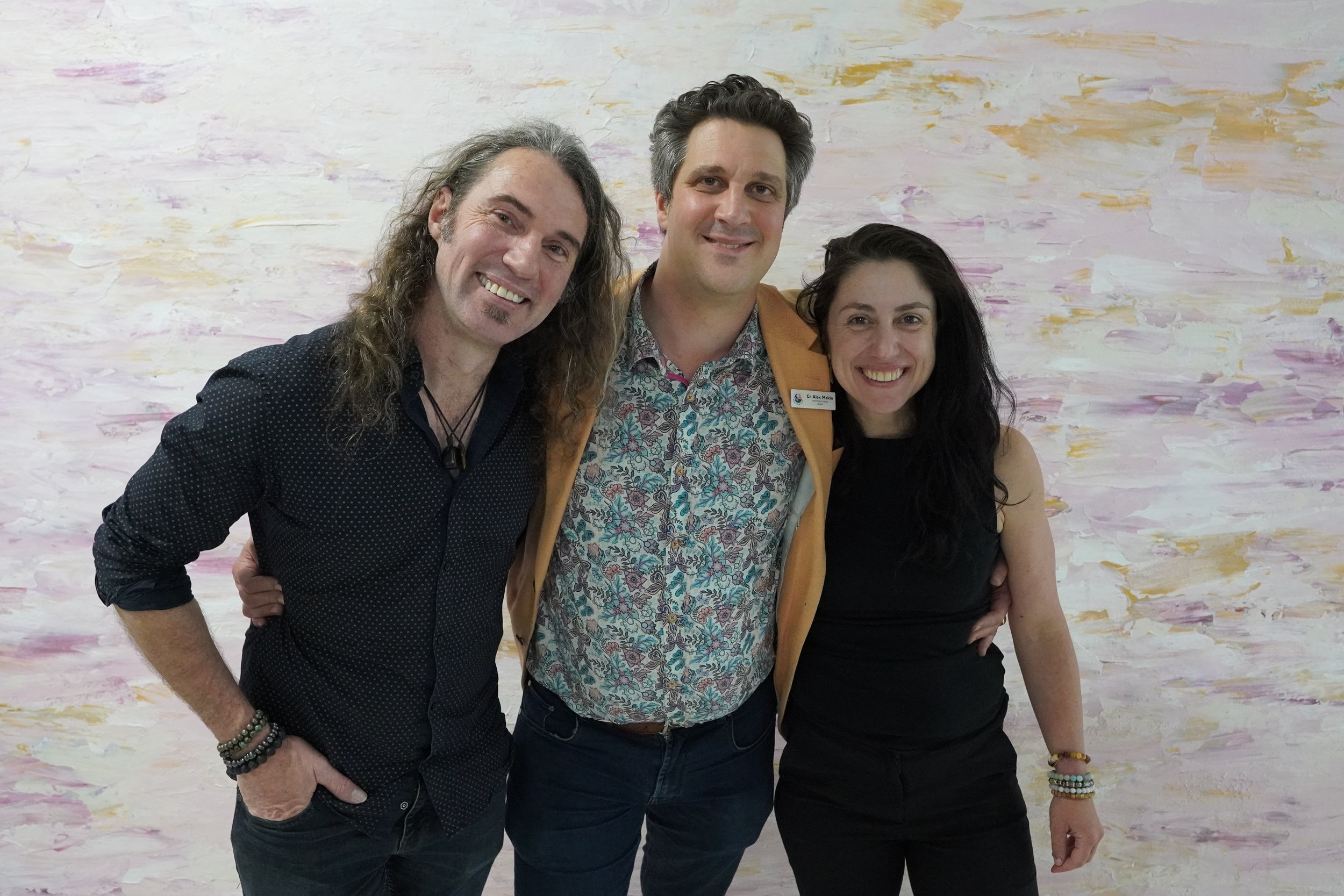
Romulus Gallery Manager, Scott Ross; Mayor Alex Makin & Contemporary Interdisciplinary Artist, Angelina Mirabito, PhD
Videography and Editing by Scott Ross
Romulus Folio Gallery was built through love of art, labour, and a shared leap of faith by Angelina Mirabito and Scott Ross. We extend our sincere appreciation to The Gladstone | Greystar for providing the ideal home for this vision to grow. We also offer our sincere appreciation to Mayor Alex Makin, whose presence at the Embers Exhibition opening and every opening since has been a meaningful source of support.