DECONSTRUCTED: The Visible Moment Between Forms
On 26 June, ROMULUS’ time at 55 Gladstone Street will come to an end.
The idea for DECONSTRUCTED began with something my mentor Alex shared with me two and a half years ago: that one way of understanding people and places is to return them to their origin point and ask how they became what they are. I never imagined that idea would eventually become an exhibition. I simply carried it with me, allowing it to quietly shape the way I looked at art, people and place, and the ways in which things come into being.
I have always been fascinated by art in the process of becoming. The finished work has never held the same intrigue for me as the decisions, revisions, risks and acts of making concealed within it. We encounter outcomes so often that we forget they are constructions. We see what something is and rarely consider how it came to be. To deconstruct something is not to destroy it. It is to temporarily suspend a finished form so that its structure becomes visible again. It is a return to process, to origins and to possibility.
Two and a half years ago, Alex also encouraged me to distinguish a brand from art and to understand the difference between the two. I understood the words intellectually, but I did not yet understand their implications.
I see ROMULUS as art.
I still do.
For me, ROMULUS has always been about becoming more of what it is. I have approached it as I approach the canvas: as something living, responsive and continually unfolding. It has never felt like a fixed object or a predetermined outcome. It has felt like an evolving proposition, one that comes to know itself through action, relationships and space.
I am also beginning to understand something about myself. I become captivated by what something could be long before I fully understand the mechanics of what is and how it came to be. I am instinctively drawn towards possibility. Yet possibility also requires inquiry. Deconstruction invites us to return to process and examine structure, conditions and relationships. By temporarily suspending the finished form, it reveals the often-hidden architecture of becoming, allowing us to recognise what remains essential and what still has the potential to unfold.
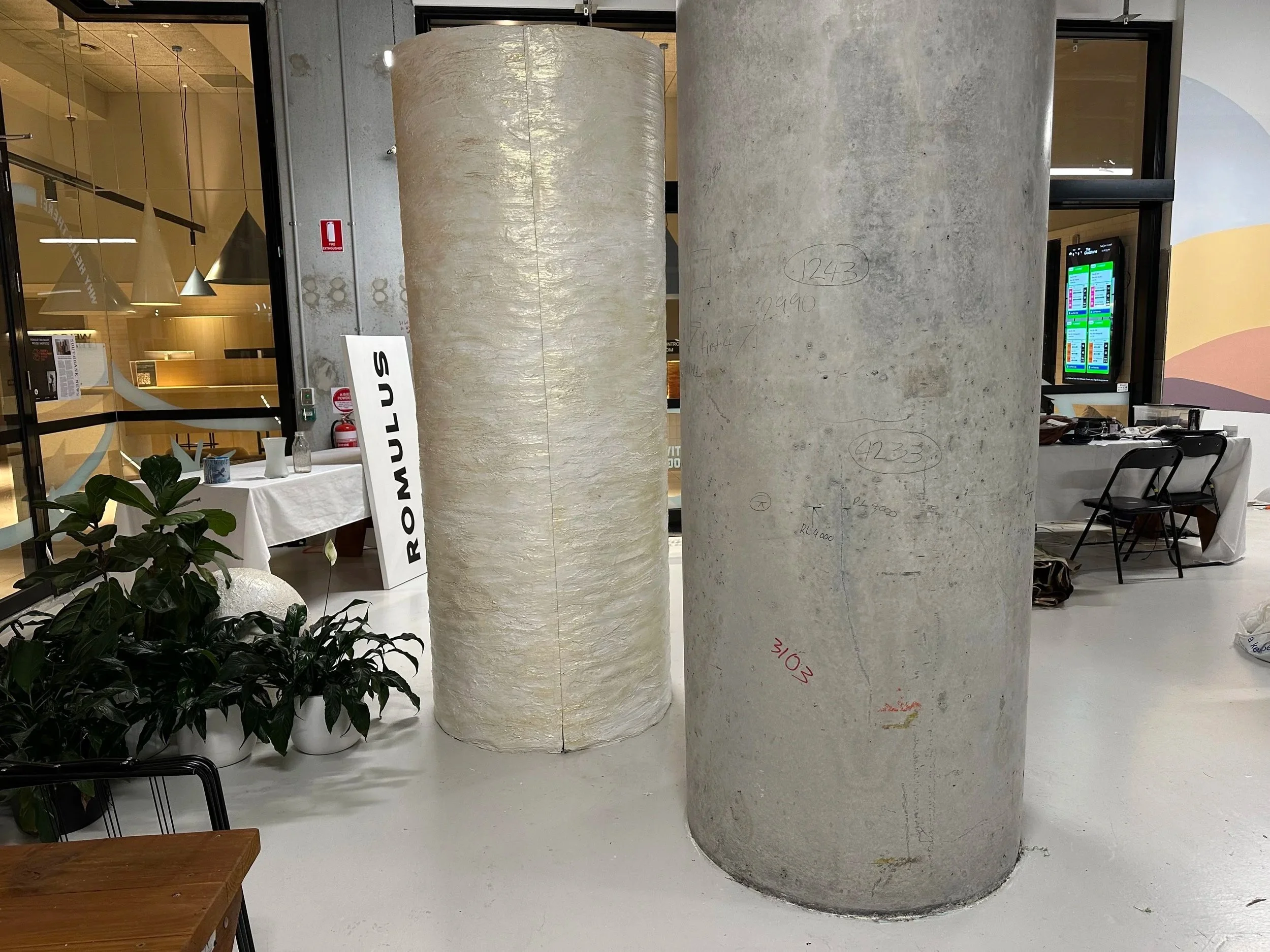
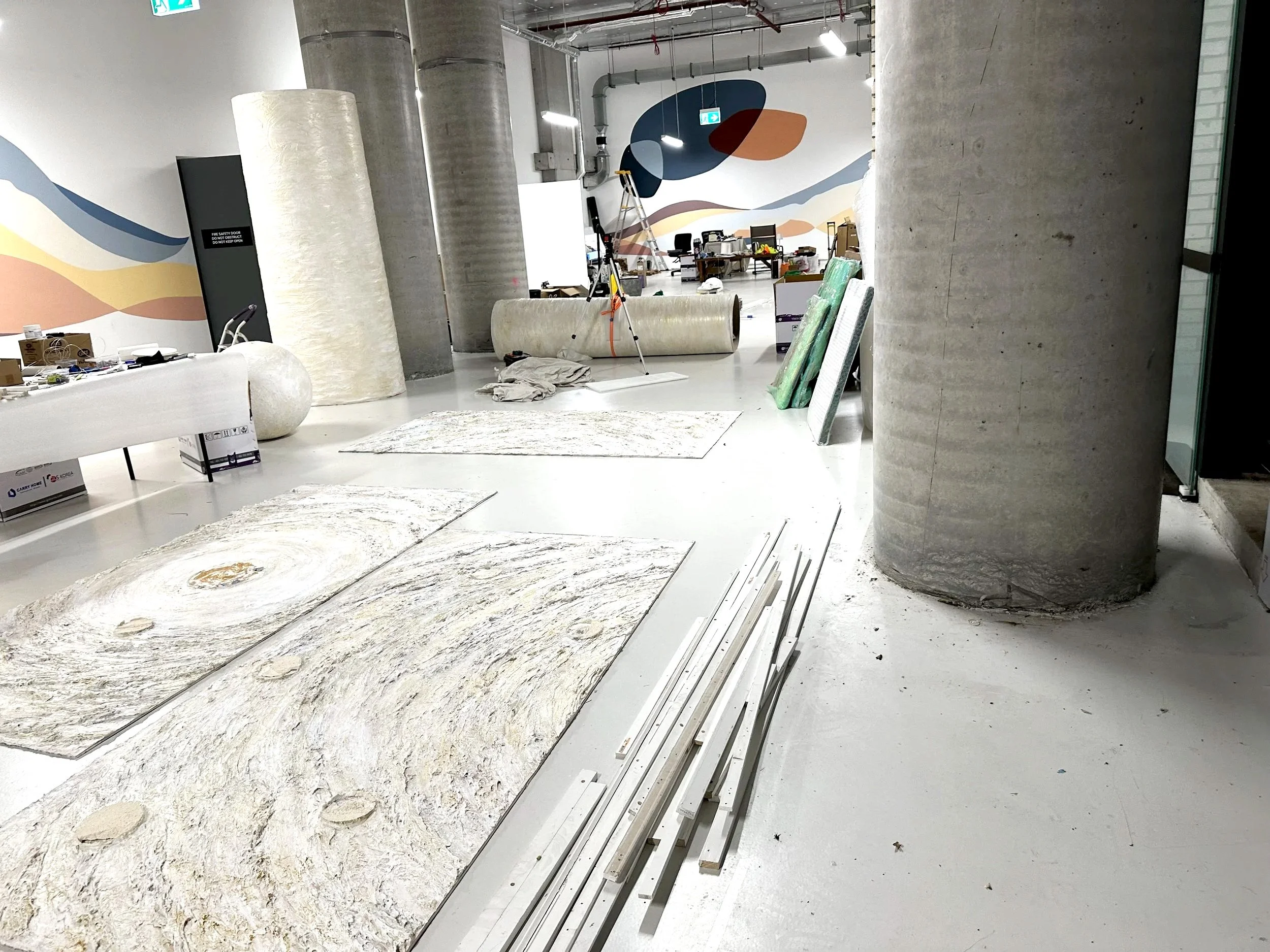
I fully surrendered to this understanding while literally dismantling the site-specific structures. In that moment, I could already see where and how I would reconstruct them elsewhere. I realised that DECONSTRUCTED had become more than a conceptual exhibition.
The work is not the space. The work is what becomes possible within a space.
No single space can entirely define ROMULUS. It exists in relationship with the environments it inhabits. Each space changes it and it, in turn, changes each environment. It does not move for the sake of movement or reinvention. When remaining in its current environment is no longer possible, it reconstructs itself elsewhere.
This process has felt like the conclusion of a particular iteration of ROMULUS and, in many ways, the conclusion of a particular iteration of me. Perspectives have at once multiplied and converged, refracting into new ways of seeing. Certain forms of ROMULUS have reached their conclusion so that others might emerge.
The only real consistency has been art. And having said that, the art is always evolving. The materials evolve. The questions evolve. The forms evolve. The vision evolves. The environments evolve. I evolve. The artists evolve. The ROMULUS Team evolves. The community evolves.
Perhaps the consistency has been a commitment to continual becoming. Perhaps this is also what my mentor was inviting me to understand all along. DECONSTRUCTED is an essential visible moment between forms. It asks how people, places and things became what they are, and what they may have the intrinsic potential to become.
Written by Angelina Mirabito, PhD
June 22, 2026