
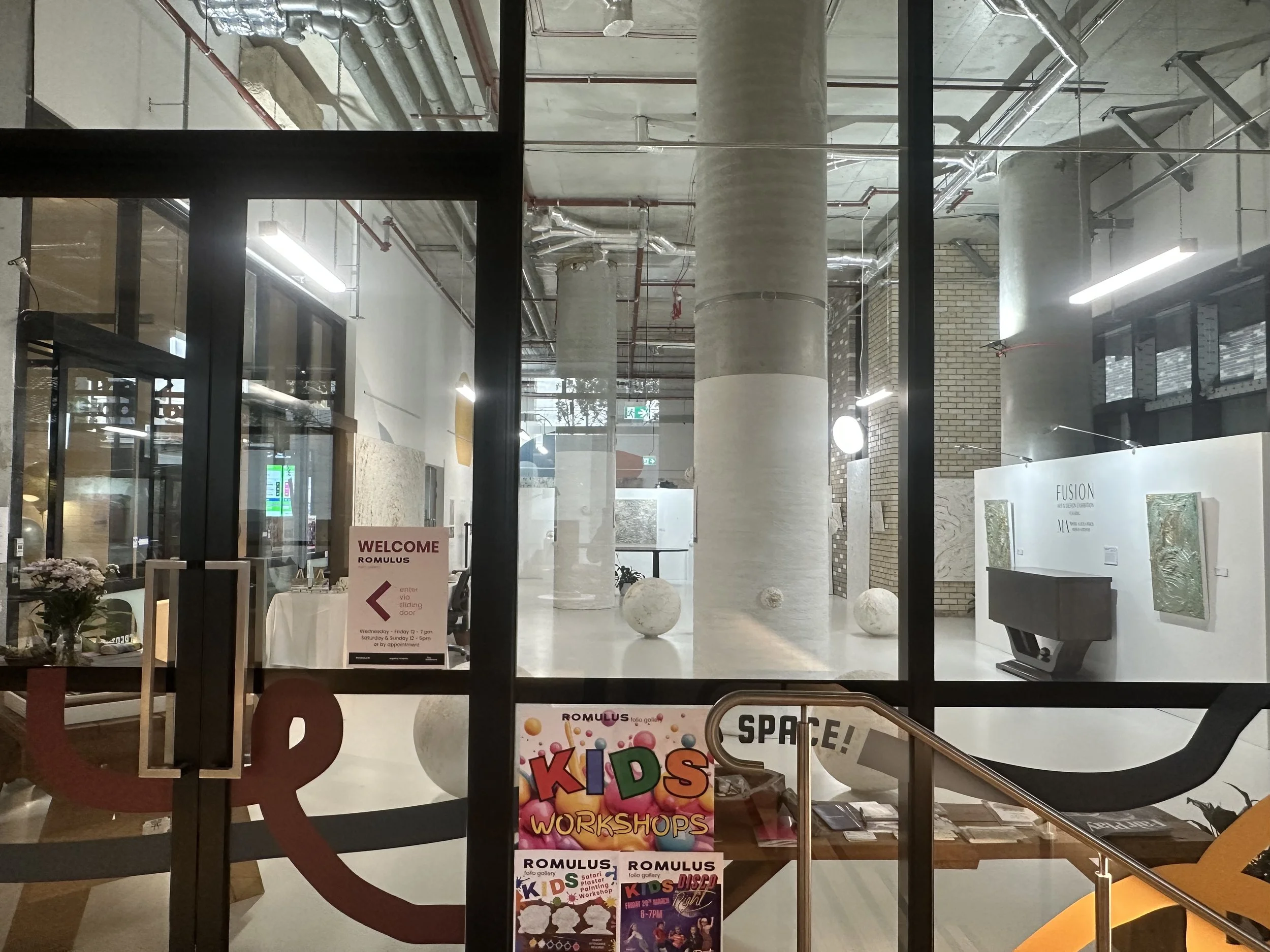
Fusion Exhibition at Romulus Folio Gallery featuring Mark Alexander Design
By Angelina Mirabito, PhD
Published March 2026
Introduction
In the emerging urban landscape of Fishermans Bend, architecture is shaping new buildings as well as the cultural life that will inhabit them. Within the Tower B lobby of The Gladstone, a space designed by the acclaimed interior design studio Hecker Guthrie, a quiet intersection occurs between architecture, interior design and contemporary cultural practice.
What is typically conceived as a transitional residential entry becomes something more porous and alive. Through the presence of Romulus Folio Gallery, the lobby operates as a threshold space where art, design and community encounter one another within one of Melbourne’s most significant urban renewal precincts.
Fishermans Bend: A City in Formation
Fishermans Bend represents one of the largest urban transformation projects in Australia. Formerly an industrial landscape of factories and warehouses, the precinct is gradually being reimagined as a dense residential and mixed-use neighbourhood.
Yet the formation of a city is never solely a matter of infrastructure, planning frameworks or architectural form. The identity of a place emerges through the experiences that unfold within it. As new districts develop, cultural activity often plays a crucial role in shaping how people encounter and inhabit these environments.
Artists, designers and independent cultural initiatives frequently become early contributors to this process. They introduce moments of reflection, conversation and shared experience that allow communities to begin forming a relationship with the spaces around them. In this sense, culture becomes part of the slow emergence of place.
Architecture and the Threshold
Within contemporary residential architecture, the lobby occupies a unique spatial position. It is both an entrance and a meeting point. Residents move through it each day as they transition between private life and the wider city. Visitors arrive and depart. Moments of recognition, curiosity and conversation occur within its boundaries.
Although often overlooked in architectural discourse, the lobby is one of the few spaces within residential buildings where the collective life of the building becomes visible.
The Tower B lobby at The Gladstone exemplifies this transitional quality. It is not simply a point of circulation but a spatial pause between exterior and interior environments. As a threshold space, it holds the potential to become something more than a functional passage.
When art enters such a space, the experience of architecture itself begins to shift. Movement slows. Surfaces are noticed. Objects invite attention. The environment becomes a site of encounter.
Interior Design and Atmosphere
The interior design of the Tower B lobby contributes significantly to this atmosphere. Designed by the Australian studio Hecker Guthrie, the space is characterised by restraint, tonal harmony and careful consideration of materials.
Rather than relying on decorative excess, the design language emphasises subtlety. Stone surfaces, timber textures and neutral tonal palettes create a sense of calm material presence. Light moves gently across the surfaces of the space, reinforcing the quiet rhythm of the interior environment.
This restraint allows the architecture to breathe. It also creates an environment where artworks and objects can exist without visual competition. In this way, the interior design establishes a framework within which cultural activity can unfold.
The space becomes defined by atmosphere, allowing the presence of art to emerge naturally within the architectural setting.
Cultural Activation: Romulus Folio Gallery
Within this architectural and interior context, Romulus Folio Gallery introduces a layer of cultural programming into the shared space of the building.
Founded and led by artist and curator Angelina Mirabito, with gallery manager and videographer Scott Ross, Romulus Folio Gallery established an independent contemporary art program within the Tower B lobby, introducing exhibitions, workshops and public cultural activity into the shared space of the building.
Operating as an artist-run gallery and curatorial platform, Romulus Folio Gallery presents exhibitions, workshops and public events within the Tower B lobby. The gallery and open studio exist within the everyday rhythms of residential life, offering an alternative to the traditional white-cube gallery environment.
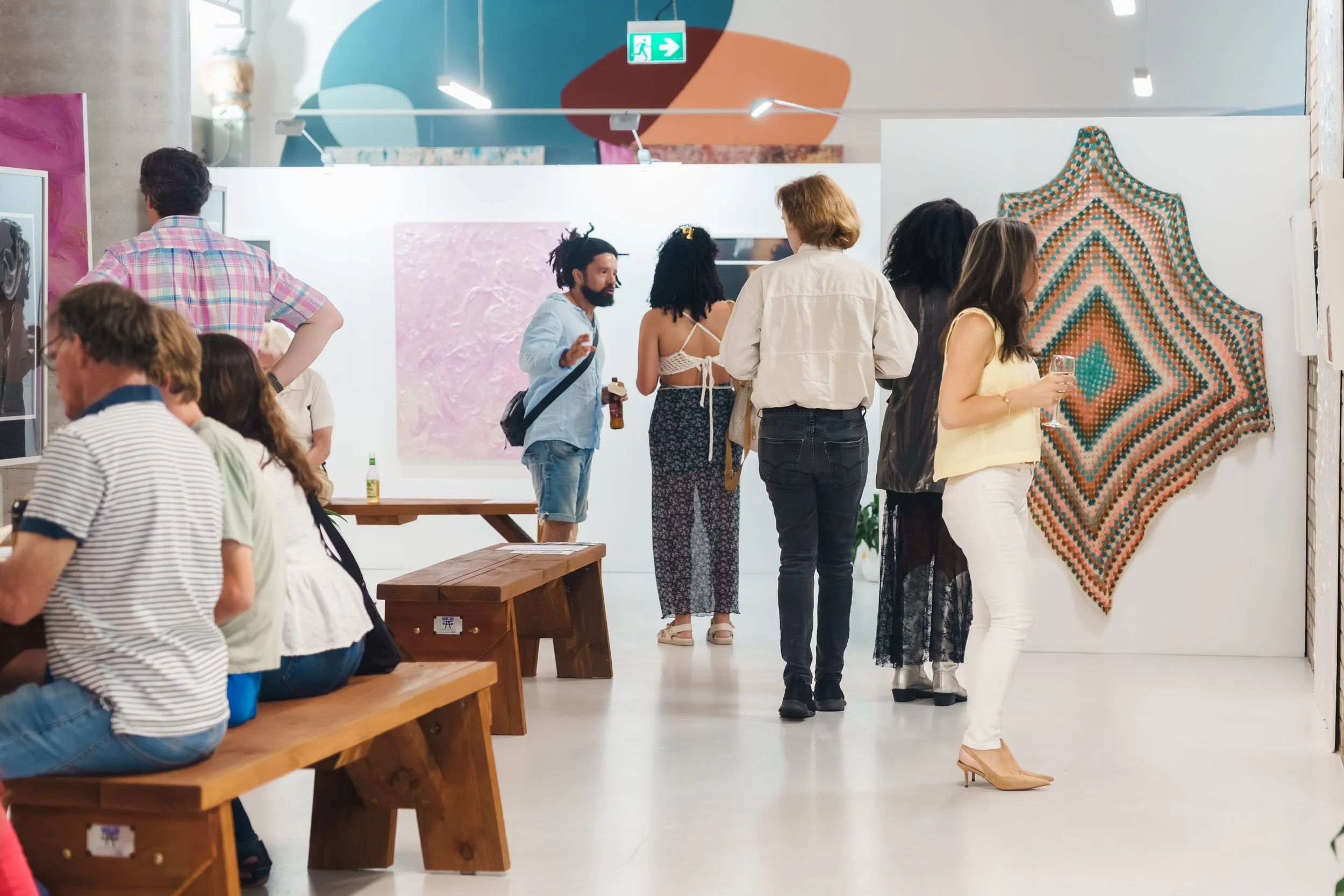
Residents encounter artworks as part of their daily movement through the building. Visitors arrive not only to see exhibitions but also to experience the architecture and atmosphere of the space itself. Artists and audiences gather for openings, discussions and creative exchanges.
Through this presence, the lobby begins to function as a cultural interface between architecture and community.
Art is integrated into the lived environment of the building. In this way, the gallery participates in expanding the ways contemporary art can be encountered within the city.
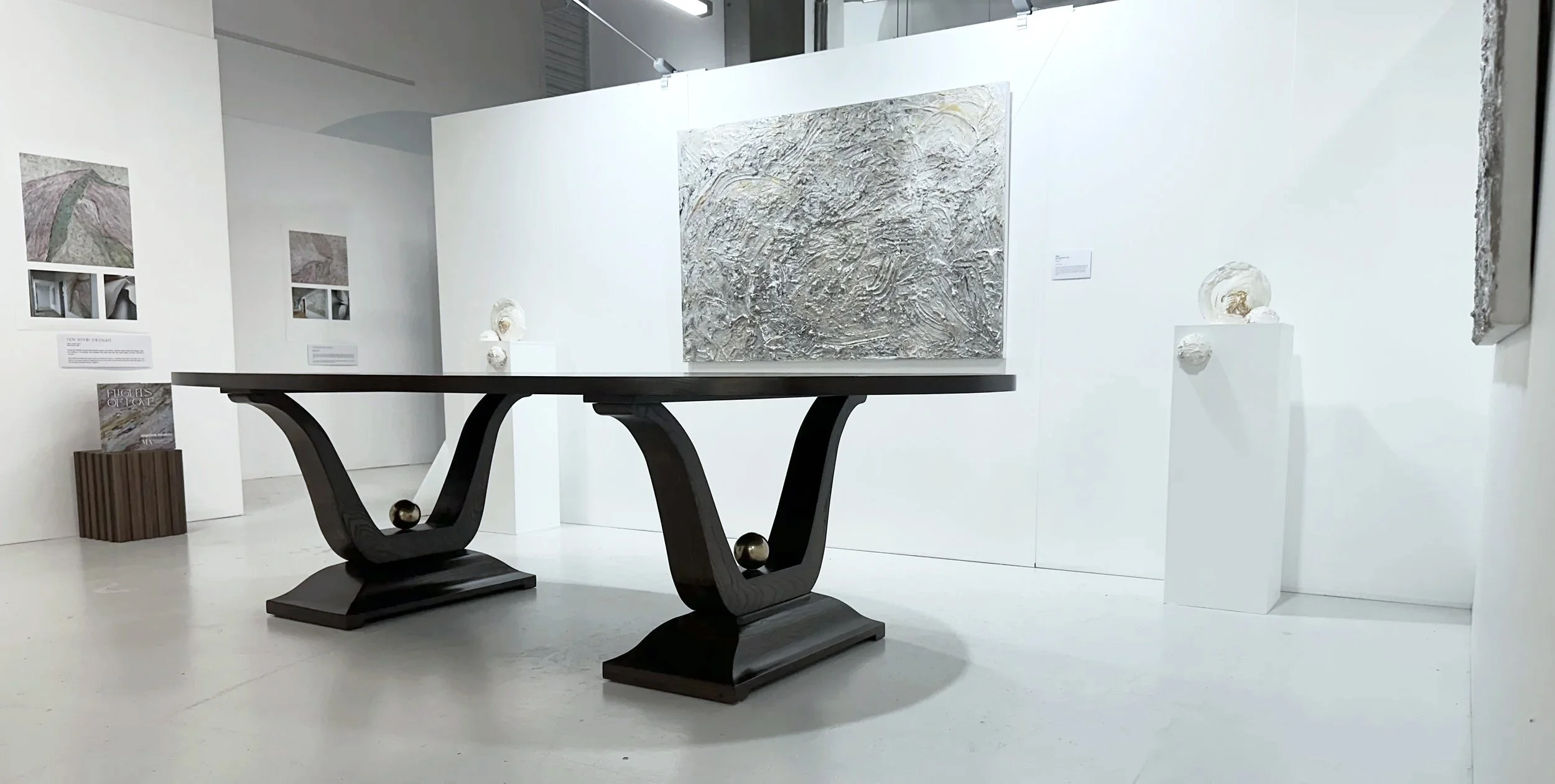
Fusion Exhibition at Romulus Folio Gallery Featuring Mark Alexander Design
Art, Myth and Civic Imagination
The name Romulus Folio draws upon the mythological figure of Romulus, the legendary founder of Rome. In mythology, Romulus represents the act of establishing a city; the moment when territory becomes a place of shared identity and meaning.
While contemporary urban development operates through planning systems and architectural frameworks, the symbolic dimension of city-making continues to unfold through culture.
Art contributes to this process by introducing narrative, reflection and imagination into the spaces we inhabit. Through artworks, conversations and shared experiences, places begin to accumulate cultural memory.
Within the Tower B lobby, this mythic reference quietly echoes the larger transformation occurring across Fishermans Bend. As new buildings rise and neighbourhoods take shape, cultural activity becomes part of the process through which a new civic identity begins to emerge.
A Living Architectural Space
As Fishermans Bend continues to evolve, spaces such as The Gladstone demonstrate how architecture, interior design and independent cultural practice can intersect in meaningful ways.
The lobby, often considered a purely functional zone, reveals its potential as a site of encounter. Through the presence of art, conversation and community engagement, the architecture begins to host a different form of civic life.
In this sense, the Tower B lobby operates not only as an entrance to a residential building but as a threshold between architecture and culture. Within this transitional environment, art becomes part of the everyday experience of the precinct, contributing to the gradual formation of its cultural identity.
As new neighbourhoods emerge across Melbourne, such intersections between design, community and creative practice suggest how architecture might support not only the physical structures of a city, but also the cultural life that animates it.
Through its exhibitions, open studio and public programming, Romulus Folio Gallery has contributed to the emerging cultural life of the Tower B lobby at The Gladstone, demonstrating how independent artistic initiatives can activate architectural space within a developing urban precinct.
About the Author
Angelina Mirabito is a Melbourne-based interdisciplinary contemporary artist, curator and founder of Romulus Folio Gallery. Her practice explores material abstraction, architectural space and the role of art within emerging urban environments.
Romulus Folio Gallery operates as an artist-run exhibition and cultural platform presenting contemporary art, design and public programming within the Fishermans Bend precinct.
Romulus Folio Gallery
55 Gladstone Street
South Melbourne VIC 3205
Open Studio Gallery
Wednesday – Friday 12pm–7pm
Saturday – Sunday 12pm–5pm