
PRISM: Shifting Tides in Fiona Johnston’s art
31 July 2026
Written by Zic Liu
A prism does not create colour. It reveals the different colours that already exist within light. In the PRISM exhibition, Fiona Johnston’s work follows a similar idea. Her paintings invite viewers to look again at colour, coastal environments, and natural change. Her two works, Thermal Shift and Swan’s Path, create different visual effects. However, both use flowing forms, layered surfaces, and blended colours to show a natural world that is always changing.
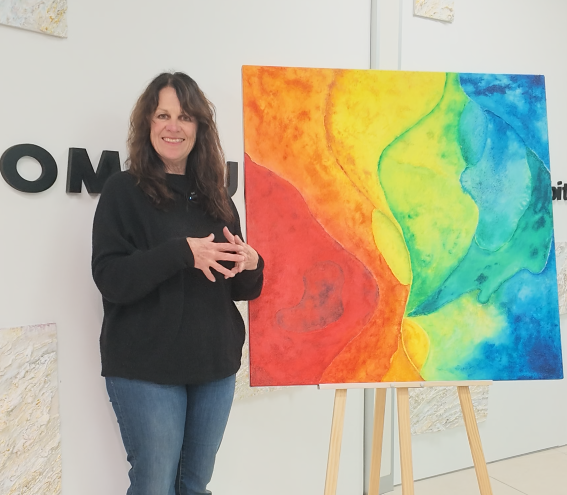
Fiona Johnston and Thermal Shift at ROMULUS
Thermal Shift first catches the viewer’s attention through its bright colours. Red, orange and yellow move across one side of the painting and gradually shift into green and blue. The colours are not separated by hard lines. Instead, they meet, overlap, and blend along curved edges. This movement from warm to cool colours makes the painting look like a visual map of temperature, seasons, and ocean energy.
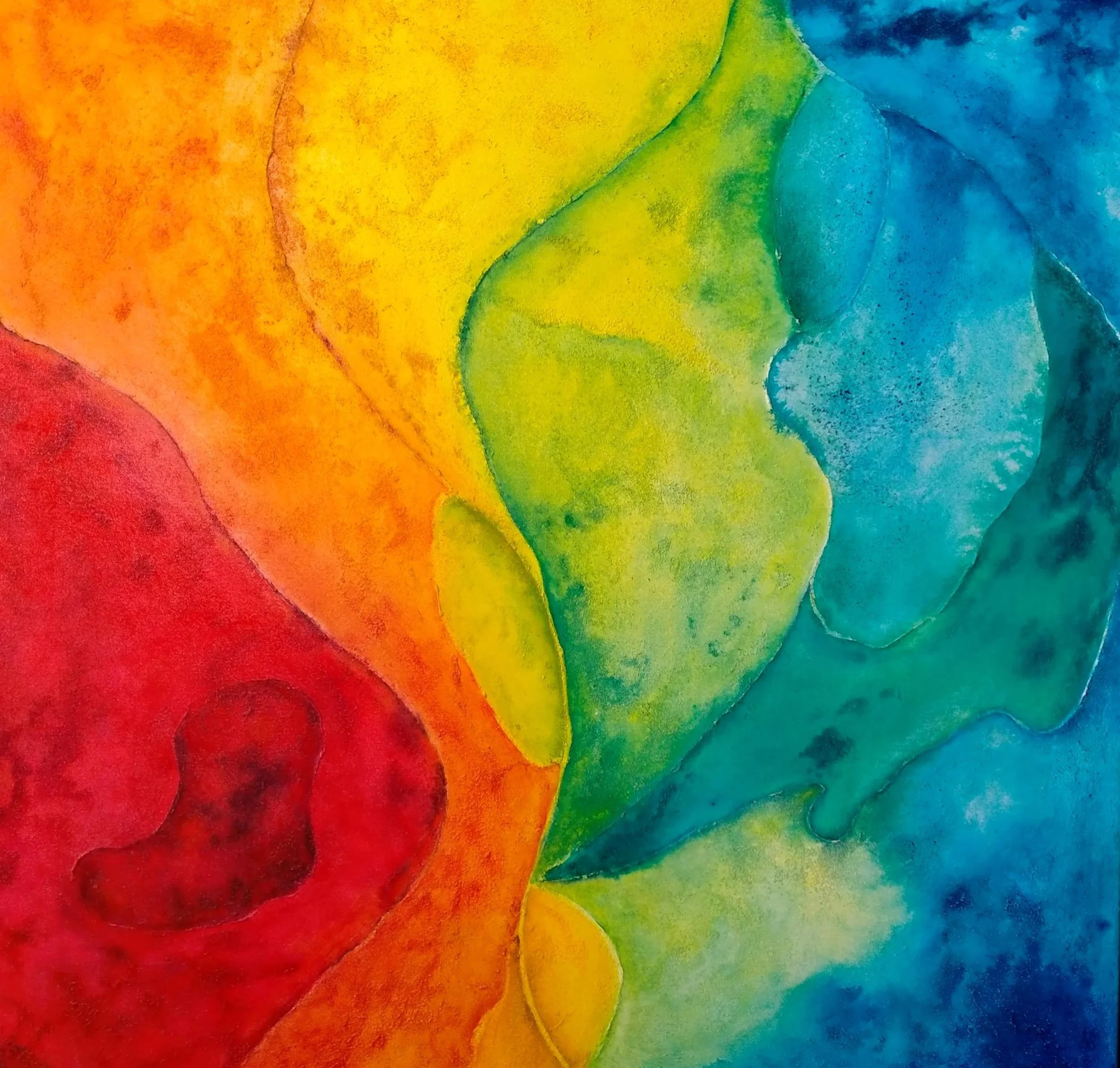
Fiona Johnston, Thermal Shift, 103 × 103 cm, Mixed Media, Acrylic on canvas, textured, 2026, $960
The work uses sand and acrylic paint on a textured canvas. Its layered surface gives the painting a strong physical quality. The colour can be seen clearly, but the surface also feels almost touchable. The work reflects the shifting energy of the season. It also captures the delicate balance of the natural environment.
The changing colour temperature in Thermal Shift also connects to the fragile reality of global warming. The movement between heat and cold, and between expansion and retreat, gives the painting a deeper meaning. The colours show natural change, while also reminding us that these patterns are being affected by climate change.
By comparison, Swan’s Path uses softer colours and has a slower, more peaceful rhythm. Pale blue, grey-green, pink, purple, and orange form a winding path through the painting. The work is centred on the graceful shape of a swan, but it is not painted in a realistic way.
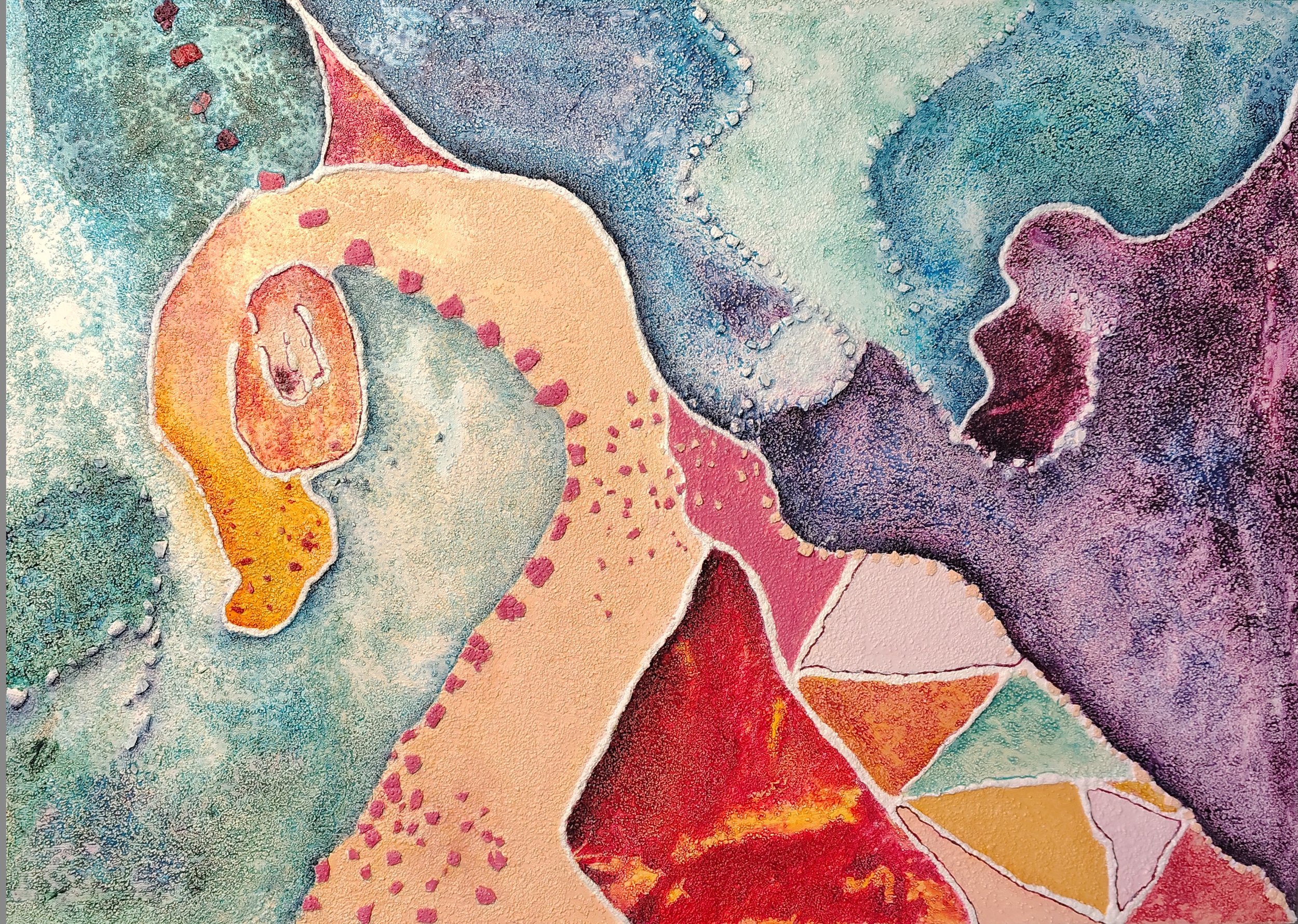
Fiona Johnston, Swan’s Path, 900 × 610 cm, Mixed Media, Acrylic on canvas, textured, 2026, $820
Johnston also used broken pieces of sea urchin shells around the swan’s neck. These natural materials add texture to the surface and create a direct connection between the swan and the coastal environment. The shells were once hard and complete, but they have been broken and rearranged in the artwork. This gives them a sense of fragility, change, and renewal.
This material detail makes the “path” in Swan’s Path feel like more than a visual line. It becomes a journey shaped by the ocean, living creatures, and the changing environment. The swan is closely connected to the landscape around it.
Within PRISM, these two works show how colour can express environmental experience. Like light passing through a prism, Johnston’s paintings reveal different layers of natural change. Her coastal landscapes are not still or fixed. They are shaped by seasons, climate, ocean movement, and living creatures. Through colour and texture, the works invite viewers to move between the beauty and fragility of the natural world.
